Upstate South Carolina · Careful, targeted pest control
Protect Your Family From Wasps in Spartanburg, SC
Protecting your family from wasps and hornets in the Upstate comes down to four steps: know what you're dealing with, correct conditions on your property, treat harborage directly, and stay on a rhythm so pressure doesn't…
- Treatments built around how your family actually uses the home
- Local dispatch from Spartanburg across the Upstate
- If a visit isn't needed, we'll say so on the phone
Quick Answer
Protecting your family from wasps and hornets in the Upstate comes down to four steps: know what you're dealing with, correct conditions on your property, treat harborage directly, and stay on a rhythm so pressure doesn't rebuild. This guide walks through each step the way Paladin Pest Solutions does it on real Upstate homes.
For the next step, compare wasp and hornet control, read about family protection from wasps, or check where Paladin works across Upstate SC.
Key Takeaways
- Wasps and hornets are most active spring colony build, late-summer peak aggression.
- Conditions around your home (mulch, gutters, food, water) drive most of the pressure.
- Identifying the species first prevents the wrong product on the wrong pest.
- Targeted treatment of harborage zones beats blanket spraying every time.
- Quarterly rhythm keeps pressure from rebuilding between visits.
What about wasps and hornets actually puts a family at risk?
Wasps and hornets are a family-protection issue because paper-wasp nests under eaves, bald-faced hornet nests in trees, yellow jackets in ground holes.
In the Upstate, wasps and hornets are most active spring colony build, late-summer peak aggression. They concentrate in eaves, soffits, decks, ground holes. Finding where they nest, hide, and travel is the first step in keeping kids and pets out of contact. This connects closely with Paladin wasps and hornets control when you are comparing next steps.
Most Upstate families don't realize how much of the risk is conditioned by the property itself. Mulch piled against the house, gutters that overflow, sweet drinks on a deck, pet food left out overnight, these conditions are an open invitation. The good news is they are all things we can change.
What this means for your home
- Wasps and hornets usually enter Upstate homes through soffit gaps, sliding-door tracks, weep holes, or dryer vents
- Toddlers spend most of their time at ground level, exactly where wasps and hornets signs first appear
- Family and pet awareness means we explain treated areas, re-entry timing, and simple prep steps before work begins.
- Wasps and hornets stop being a nuisance and become a medical concern when reactions, asthma flare-ups, or disease risk enter the picture
- In the Upstate, wasps and hornets stay active far longer than the national average, usually most of the year
What can my family do this weekend?
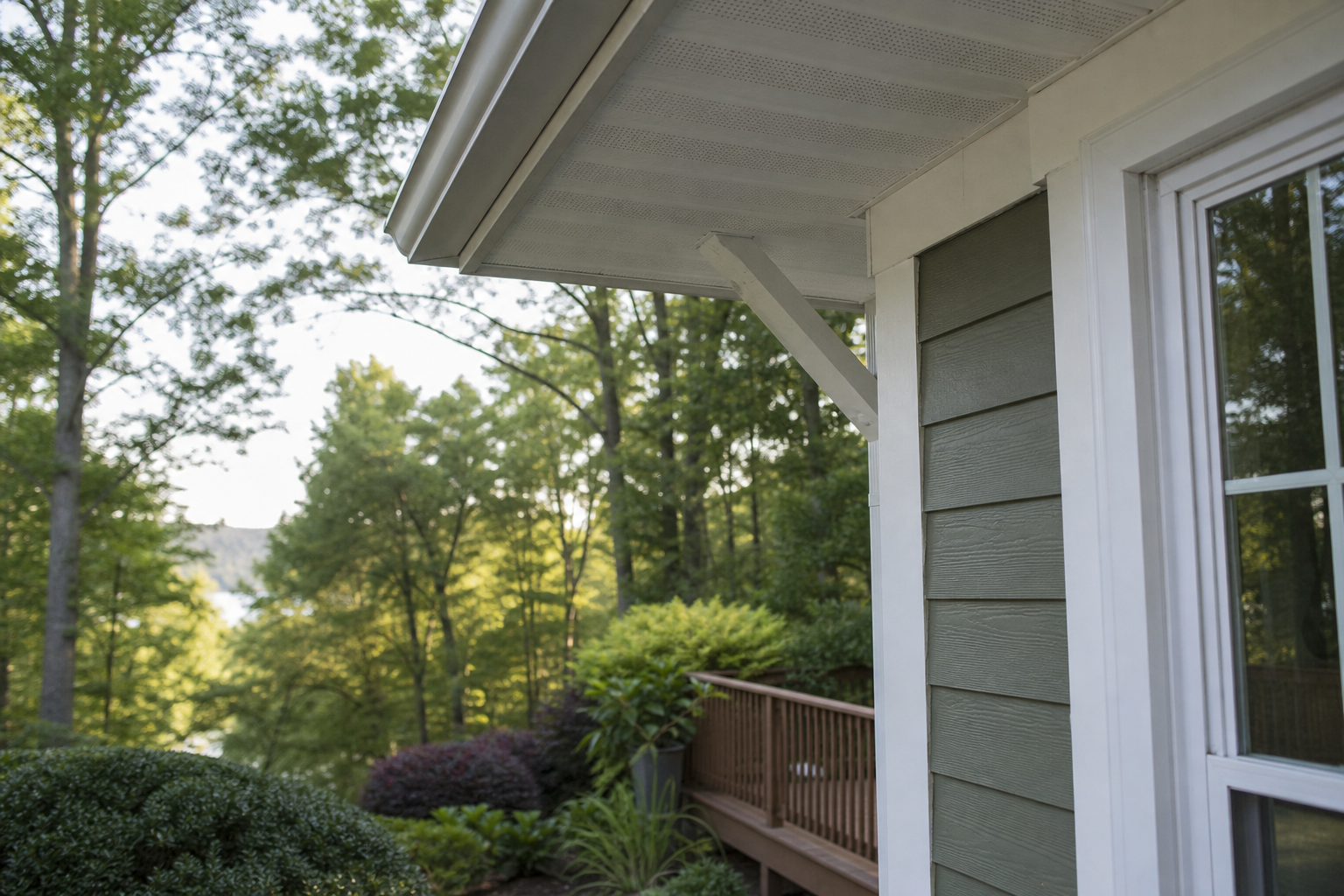
Walk the perimeter and look up, because wasps and hornets nest in the sheltered overhangs your family walks under. Map every active nest and the door it sits near before anyone reaches for a ladder.
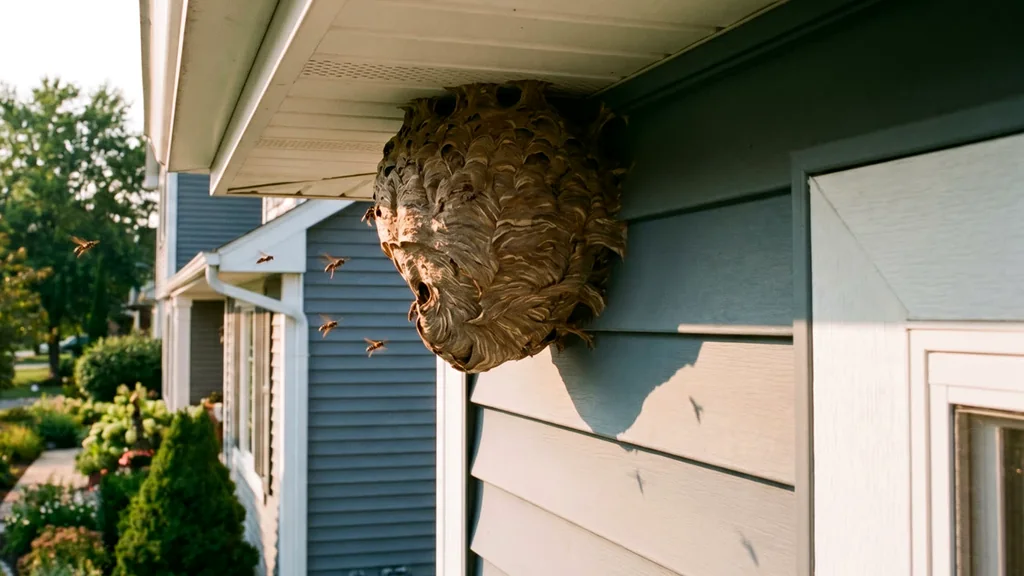
Check eaves, soffit corners, deck rails, grill covers, mailbox posts, and playset framing for open paper-wasp umbrellas. Then scan trees and shrubs for the enclosed, football-shaped hornet nests that get defensive when disturbed. Homeowners seeing similar pressure can also review Entry point sealing before scheduling.
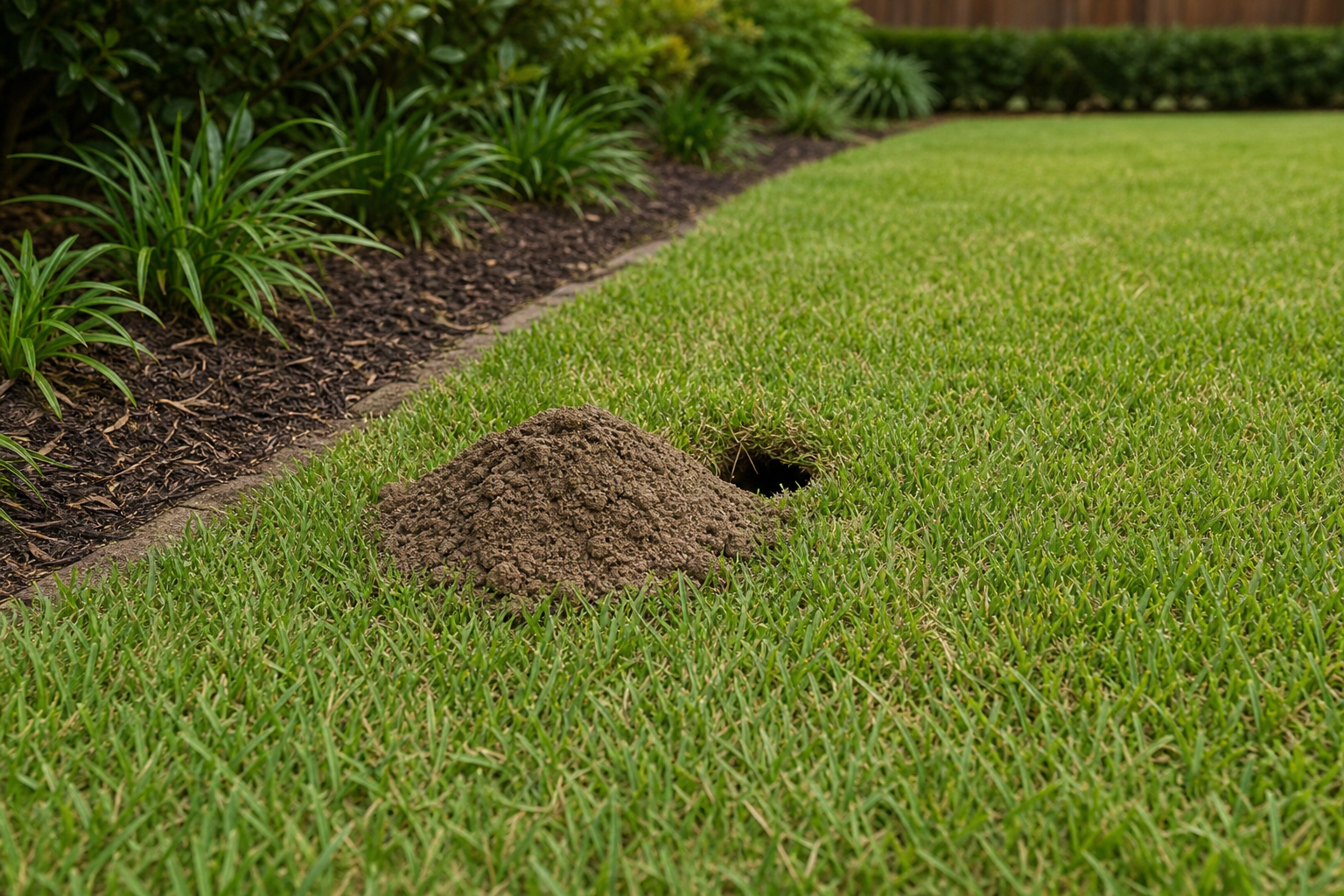
Watch the ground, too. Yellow jackets nest in lawn voids and old rodent burrows and will boil out in response to a mower's vibration, exactly the surprise you don't want when kids are running the yard.
What this means for your home
- Scan eaves, soffits, rails, and grill covers for open paper-wasp nests
- Look in trees and shrubs for enclosed, football-sized hornet nests
- Watch for ground-nesting yellow jackets near lawn voids and old burrows
- Family and pet awareness means we explain treated areas, re-entry timing, and simple prep steps before work begins.
- Note which doors and play areas sit closest to each nest
Is professional pest control safe for kids?
Used the way we use it, targeted to harborage, with re-entry guidance, yes. We tell you exactly what we apply, where, and how long until the area is back to normal.
Prefer to skip the guessing?
We'll identify the pest, point out conditions, and quote what's actually needed.
What does Paladin do that I can't do myself?
We bring identification, harborage knowledge, professional-grade product placement, and a recurring rhythm that DIY rarely sustains.
On a stinging-insect visit we confirm the species first, because a paper wasp, a bald-faced hornet, and a ground yellow-jacket colony each call for a different protective approach. The wrong move at the wrong time of day is how people get stung. For a wider plan, pair this with wasp and hornet control so the whole property is covered.
Next we treat the harborage where the population actually lives, not the surface where you saw one bug. That's the single biggest reason professional treatments outlast DIY: we don't decorate the visible surface, we hit the home base.
What this means for your home
- Species ID drives the method, open nest, enclosed nest, and ground colony differ
- We treat at the safe time of day with the right protective gear
- Wall-void nests get treated, not sealed shut, trapped wasps chew inward
- We check the surrounding structure for the hidden nests DIY sprays make worse
- Family and pet awareness means we explain treated areas, re-entry timing, and simple prep steps before work begins.

When should we just call Paladin?
Call before anyone gets stung: any nest near a doorway or play area, any enclosed hornet nest, any ground yellow-jacket colony, or any nest bigger than you're comfortable approaching.
Plenty of families call us early just to walk the property and tell them what we see, there's no shame in that. We would rather visit and tell you 'nothing to do' than wait until a small problem becomes a big one. This connects closely with wasp and hornet control when you are comparing next steps.
Reach us at (864) 816-7658 or info@paladinpestsolutions.com. Office hours are Mon-Fri 8am-8pm and Sat 10am-4pm.
What this means for your home
- A nest near a door, deck, or playset is worth handling before late summer
- Enclosed hornet nests turn defensive fast and aren't a ladder-and-spray job
- Ground yellow jackets near a mowing path are a real sting hazard
- The same-day URL reflects urgent search intent. The office confirms current availability after reviewing the request; no fixed response window is promised.
- If a nest is in a wall void, call rather than sealing it from outside

Wasps, hornets, and yellow jackets
Sting-risk inspection at eaves, decks, and play areas
Paladin treats stinging-insect work as a family-safety call. We map active nests on the exterior, eaves, soffit corners, decks, mailboxes, shrubs, and choose timing that puts the family at the lowest risk.
Most paper-wasp nests can be treated late-evening with a residual product and removed safely. Yellow-jacket ground holes need a different protocol and are not a DIY job.
How this looks for a real Upstate family
Family-protection work starts before any product. We ask who lives in the house, babies, pregnancies, asthma, immune conditions, pet medical issues, garden beds, beehives, and we choose differently when it matters. The visit treats the harborage where the pests live, not the surfaces kids and pets touch. We name what we used, where we placed it, and how long until the area is back to normal. We listen, and we adjust.
A first Paladin visit is intended to document the activity, inspect relevant areas, and explain the proposed scope before work begins. Appointment timing and the exact inspection areas depend on the request and property access. Call (864) 816-7658 or use the contact form so the office can confirm the current options.
Paladin is based in Boiling Springs, SC and serves the approved Upstate locations listed on this site. Each recommendation should be tied to conditions documented at the property, including pest evidence, moisture, entry points, food, water, shelter, and access. The office confirms address availability without promising a route frequency or response window.
How a Paladin visit actually works
Four steps. Same rhythm whether the visit is one-time, quarterly, or an emergency.
Listen
We start on the phone or at your door with what you've actually been seeing, where, when, and what you've already tried.
Identify
We confirm the species and the harborage at the wall. No blanket spraying, no guess-and-treat.
Treat targeted
Application goes where the pest lives, cabinet hinges, wall voids, perimeter cracks. Living-room surfaces stay clean.
Document & follow up
We leave a written record of what we used and where, and the next visit is scheduled before we leave.
Keep exploring Paladin
Related Paladin services and guides for Upstate homeowners.
Related Paladin services
Paladin wasps and hornets control
Learn more about how Paladin handles this for Upstate families.
Read more →
Kids, pets, and pest control safety
Learn more about how Paladin handles this for Upstate families.
Read more →Pest-proofing your home
Learn more about how Paladin handles this for Upstate families.
Read more →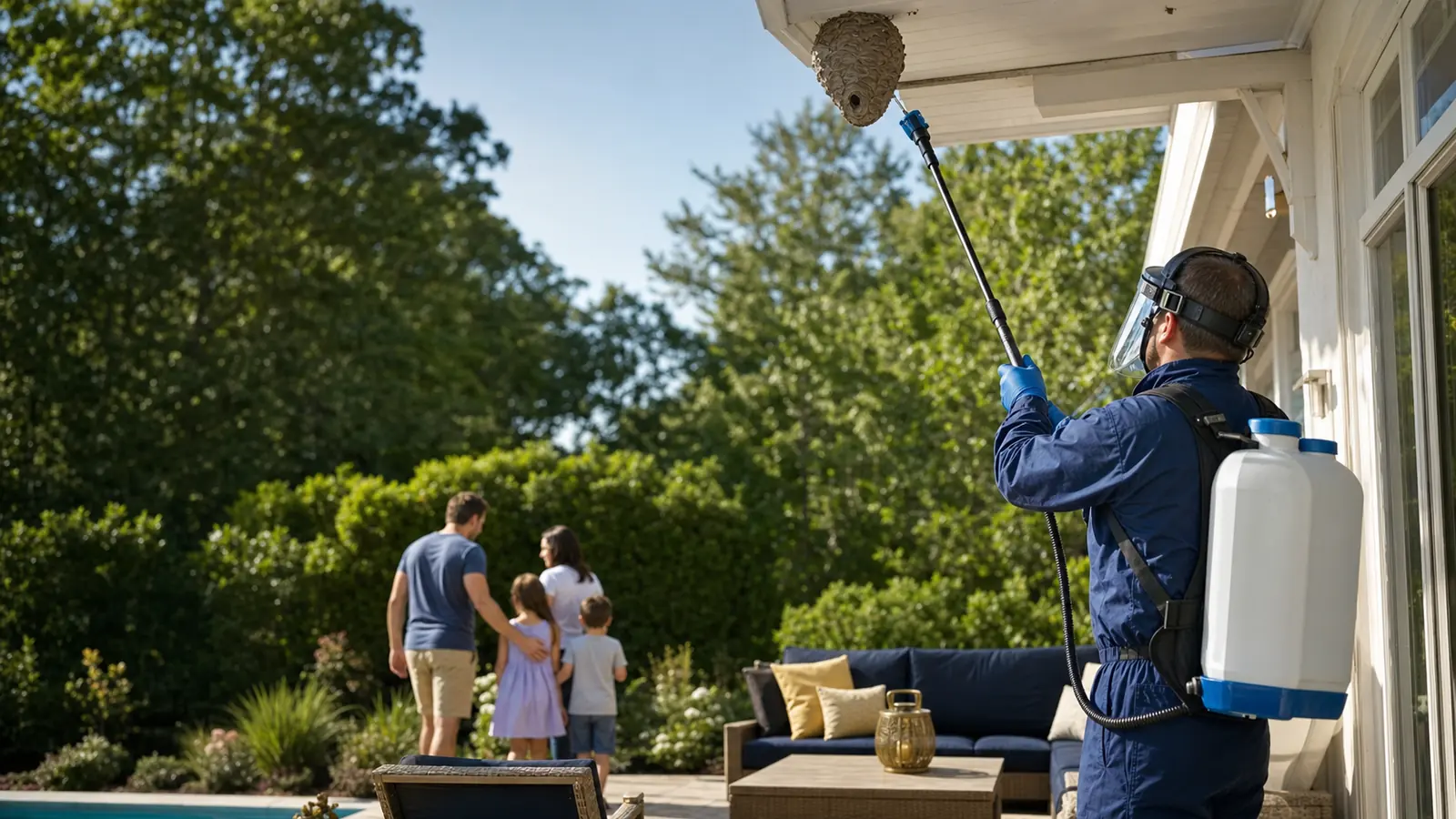
Entry point sealing
Learn more about how Paladin handles this for Upstate families.
Read more →Why IPM protects families
Learn more about how Paladin handles this for Upstate families.
Read more →Eco-friendly pest control
Learn more about how Paladin handles this for Upstate families.
Read more →Frequently asked questions
Do you guarantee my family won't see another bug?
No blanket outcome is promised. Pest pressure can return, and any follow-up is limited to the target pest, time period, exclusions, and scope in the written service terms.
How do I get started?
Call (864) 816-7658, email info@paladinpestsolutions.com, or use our contact form. We will walk through your situation and recommend the right starting point.
Ready to shield your family?
One call to Paladin and we’ll meet you where you are, from a quick walk-through to a long-term protection plan.