Upstate South Carolina · Practical, low-disruption pest work
Yellow Jacket Removal in Boiling Springs, SC: Ground-Nest Service Questions
Yellow Jacket Removal in Boiling Springs, SC starts with careful watching, not guesswork. Watch the suspected entrance from a distance. Note flight patterns and timing. Avoid mowing near the spot. Skip vibrating tools too. Record…
- Low-disruption applications focused on cracks, voids, and entry points
- Reachable techs, text us, call us, we answer
- Quarterly programs or one-time visits, your call
Quick Answer
Yellow Jacket Removal in Boiling Springs, SC starts with careful watching, not guesswork. Watch the suspected entrance from a distance. Note flight patterns and timing. Avoid mowing near the spot. Skip vibrating tools too. Record what you see. Then contact a professional for identification and next steps.
For the next step, compare wasp and hornet control, read about family protection from wasps, or check where Paladin works across Upstate SC.
Key Takeaways
- Observe ground nest entrances from a safe distance first
- Avoid mowing or vibrating tools near the site
- Document flight lines and timing before calling anyone
- Share exact yard location details with the provider
- Professional identification confirms yellow jacket activity accurately
- Integrated Pest Management supports a measured, informed response
- Limit yard traffic near the suspected opening
How can ground-nest activity be observed from a distance?
Stand fifteen to twenty feet away or farther. Watch quietly for a few minutes. Look for insects moving in and out of a small ground opening. Note the time of day and travel direction. Do not step closer or disturb the area while you watch.
Yellow jackets often use existing ground cavities. Old rodent burrows or gaps under stones work well. A steady stream of insects at one small hole is a strong clue. This connects closely with wasp and hornet control when you are comparing next steps.
Early morning or late afternoon often shows clearer activity. Temperatures are milder then. Watching during these windows helps confirm the entrance without extra guesswork.
Binoculars can help if the nest sits near a fence or garden bed. You stay farther back. You still gather useful details. For a wider plan, pair this with Upstate SC service areas so the whole property is covered.
Avoid pointing flashlights at the opening. Quiet observation is usually enough to confirm activity.
What this means for your home
- Boiling Springs service is adjusted to the home style, season, and pressure pattern instead of using the same checklist everywhere.
- Practical takeaway: Stand fifteen to twenty feet away or farther.
Why should mowing stop near the suspected entrance?
Mowing and trimming create vibration and noise. These can agitate a ground colony. Pausing yard work near the opening lowers the chance of triggering defensive behavior. This simple pause helps protect household members and pets while a professional evaluates the area.
Lawn equipment sends vibration through soil. Ground-nesting insects can react to that disturbance. Skipping that section of the yard for now is a reasonable step. Homeowners seeing similar pressure can also review family protection from wasps before scheduling.
Weed trimmers and edgers run close to ground level. That raises similar risk. Marking the spot and avoiding it during yard care keeps everyone farther away.
Children and pets should stay clear of the area too. A stake placed well away from the opening can serve as a visual reminder. This connects closely with requesting service from Paladin when you are comparing next steps.
Once professional guidance is obtained, normal yard care can resume. Until then, patience is a practical strategy.
What this means for your home
- Practical takeaway: Mowing and trimming create vibration and noise.
Is it safe to stand close to a suspected ground nest to get a better look?
No. It is safer to watch from fifteen to twenty feet away or farther. Getting closer raises the chance of disturbing the colony. Binoculars or a zoom lens camera can help you see details without moving in close.
Ready for a straight answer?
Call or message, we'll listen first and recommend only what fits your home.
What access details does the service company need?
Share the general nest location and nearby landmarks. Note any gates or obstacles in the yard. Mention whether pets or children use that area often. Clear directions help a professional plan the visit efficiently. This small step helps the visit go more smoothly overall.
A simple description helps, such as near the back fence by the oak tree. Photos taken from a safe distance add clarity without requiring you to get close. For a wider plan, pair this with wasp nest removal so the whole property is covered.
Mention gates that need opening or paths that are narrow or uneven. This helps the provider prepare before arriving on site.
If sprinklers or irrigation lines run through that part of the yard, say so. This detail can affect how the visit gets planned. Homeowners seeing similar pressure can also review wasp and hornet control before scheduling.
Sharing this information early often speeds up the visit. It also cuts down on extra questions once the professional arrives.
What this means for your home
- Practical takeaway: Share the general nest location and nearby landmarks.
Should homeowners try to confirm the insect type themselves?
Close-up identification is not recommended. Approaching the nest raises the risk of disturbance. Homeowners can note general color and size from a safe distance instead. Professional identification remains the more reliable way to confirm the species before any next step gets planned.
Yellow jackets are often confused with other stinging insects during quick glances. Getting close enough for a detailed look raises the chance of disturbing the colony. This connects closely with Upstate SC service areas when you are comparing next steps.
Instead, describe what you saw in general terms. Note coloring, size, and flight pattern. This gives a professional enough context to start their own review.
Photos taken with a zoom lens from a distance can help. These images can be shared during the first conversation with the provider. For a wider plan, pair this with family protection from wasps so the whole property is covered.
Relying on distant observation rather than a close inspection keeps the household safer. It also keeps the identification process more orderly.
What this means for your home
- Identification comes first because the right pest control plan depends on species, activity level, and where the pressure is living.
- Practical takeaway: Close-up identification is not recommended.
How does Integrated Pest Management apply to ground nests?
Integrated Pest Management favors observation and careful documentation first. Decisions come after facts are gathered. This means recording the nest location and activity patterns before acting. It supports a thoughtful response instead of a quick reaction, which fits ground-nest situations at home well.
This method encourages homeowners to understand a situation fully before deciding on next steps. Watching activity, noting timing, and recording location all fit within this approach. Homeowners seeing similar pressure can also review requesting service from Paladin before scheduling.
Rather than reacting quickly, this approach values patience and planning. That reduces unnecessary risk while still moving toward a resolution.
The framework also weighs the surrounding yard, including nearby plants, structures, and foot traffic. This wider view helps any eventual action fit the property. This connects closely with wasp nest removal when you are comparing next steps.
Applying these ideas at home simply means slowing down and gathering facts. It sets the stage for a more informed conversation with a professional.
What this means for your home
- Practical takeaway: Integrated Pest Management favors observation and careful documentation first.
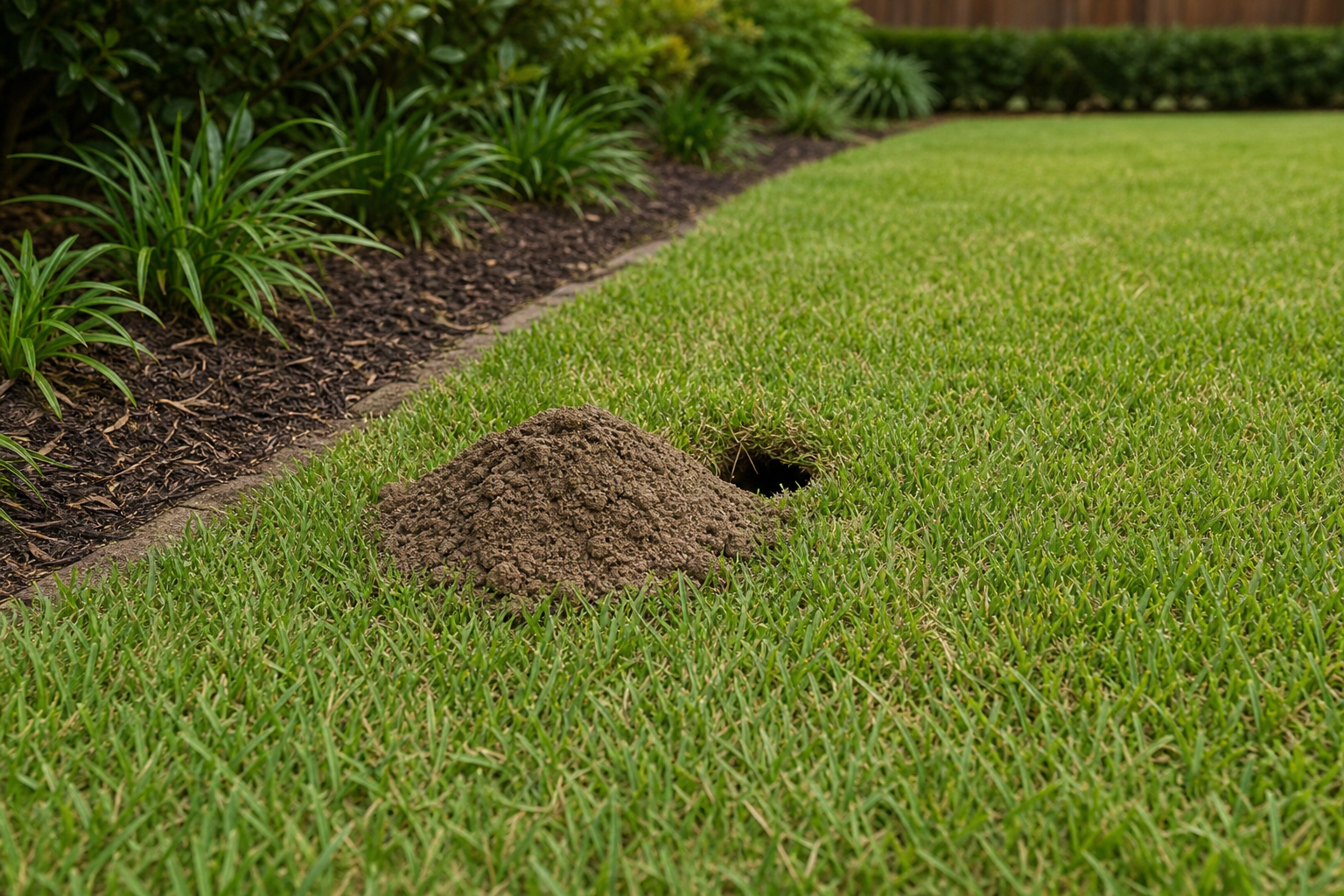
Can nearby landscaping features affect the situation?
Yes. Features like mulch beds, retaining walls, and garden edging can shape where ground nests form. Loose or disturbed soil near these spots often draws activity. Noting these details helps a professional understand the wider yard layout, without you needing to draw conclusions yourself.
Mulch beds and garden borders often have soft, workable soil. That can appeal to ground-nesting insects. If the suspected nest sits near one of these features, mention it when describing the location. For a wider plan, pair this with wasp and hornet control so the whole property is covered.
Retaining walls and stacked stone can create small gaps at ground level too. These details are worth noting since they may factor into how a professional approaches the area.
Sloped yards or spots with poor drainage sometimes have looser soil as well. Pointing out these traits gives helpful context without needing technical knowledge on your part. Homeowners seeing similar pressure can also review requesting service from Paladin before scheduling.
This kind of observation is not about diagnosing the property. It simply helps paint a clearer picture for the professional handling the visit.
What this means for your home
- Practical takeaway: Yes.
When should Boiling Springs, SC homeowners reach out for professional help?
Reach out once you see steady activity at a single ground opening over a day or two. Having location notes, timing, and general descriptions ready makes the first conversation more productive. Professional yellow jacket control in Boiling Springs, SC then follows a structured, unhurried review process.
Consistent movement at the same spot over multiple checks is a reasonable point to start the conversation. There is no need to wait for a set number of sightings before reaching out. This connects closely with family protection from wasps when you are comparing next steps.
Having your notes organized helps the professional prepare in advance. Include timing, location description, and any photos. That preparation often smooths out the whole process.
Paladin Pest Solutions serves Boiling Springs, SC and other approved Upstate South Carolina locations. Exact address availability is confirmed by the office. Reaching out early leaves time to schedule a review. For a wider plan, pair this with wasp and hornet control so the whole property is covered.
Taking these steps in order, from watching through documenting, sets up a more informed next stage. It also keeps the household safer throughout the process.
What this means for your home
- Boiling Springs service is adjusted to the home style, season, and pressure pattern instead of using the same checklist everywhere.
- Practical takeaway: Reach out once you see steady activity at a single ground opening over a day or two.
Wasps, hornets, and yellow jackets
Sting-risk inspection at eaves, decks, and play areas
Paladin treats stinging-insect work as a family-safety call. We map active nests on the exterior, eaves, soffit corners, decks, mailboxes, shrubs, and choose timing that puts the family at the lowest risk.
Most paper-wasp nests can be treated late-evening with a residual product and removed safely. Yellow-jacket ground holes need a different protocol and are not a DIY job.
Why this post exists on the Paladin blog
This post was written by someone who actually does this work on Upstate homes, not by a contractor or a marketing team that has never seen the species in person. The Paladin blog exists to answer the questions we hear on real service calls, honestly, in plain English, without selling you a service you do not need. If a post helps you solve the problem on your own, that is a successful post for us. If you read it and decide you would rather have a trained technician on site, that is what the phone is for. Either path is fine.
A first Paladin visit is intended to document the activity, inspect relevant areas, and explain the proposed scope before work begins. Appointment timing and the exact inspection areas depend on the request and property access. Call (864) 816-7658 or use the contact form so the office can confirm the current options.
Paladin is based in Boiling Springs, SC and serves the approved Upstate locations listed on this site. Each recommendation should be tied to conditions documented at the property, including pest evidence, moisture, entry points, food, water, shelter, and access. The office confirms address availability without promising a route frequency or response window.
Keep exploring Paladin
Related Paladin services and guides for Upstate homeowners.
- See the full wasp program at Paladin
- Yellow jacket ground-nest removal
- Hornet nest treatment for eaves and decks
- Active wasp nest removal
- Protect your family from wasps and hornets
- Wasp, hornet, and yellow-jacket safety guides
- Find a city near you on our Upstate route
- Tell Paladin what you are seeing and ask about current availability
Frequently asked questions
What is the first step when yellow jackets are suspected near a ground opening?
Start by watching the area from a safe distance without approaching closely. Note the location, timing, and flight pattern of the insects you see. This information becomes useful once you reach out for professional yellow jacket control in Boiling Springs, SC. It speeds up the initial review.
Can mowing near the suspected nest make the situation worse?
Mowing and trimming create vibration that can disturb a ground colony. It is a reasonable step to avoid that section of the yard until the area gets reviewed. This small pause reduces the chance of an unwanted disturbance while you wait for guidance.
How should the nest location be described to a service provider?
Describe the general area using landmarks like trees, fences, or garden beds nearby. Mention any gates, pathways, or irrigation lines close to the spot. Photos taken from a safe distance can also help give useful context for planning the visit ahead of time.
Does Paladin Pest Solutions serve homes in Boiling Springs, SC?
Yes. Paladin Pest Solutions is based in Boiling Springs, SC and serves approved locations across Upstate South Carolina. Exact address availability is confirmed by the office. Reaching out directly is still the best way to check whether your specific location is covered before any visit is scheduled.
Should homeowners try to identify the insect species themselves?
Close identification is not recommended since it requires getting near the nest itself. General observations from a distance, such as color and size, are still helpful. Professional identification remains the more reliable approach for confirming the species before any next step gets planned.
Ready to shield your family?
One call to Paladin and we’ll meet you where you are, from a quick walk-through to a long-term protection plan.