Upstate South Carolina · Pest control for homes with kids and pets
Millipede Control in Boiling Springs, SC: Planning Service After Wet Weather
Millipede control in Boiling Springs, SC works best when you document rain timing, foundation edges, leaf litter, thresholds, and entry points before scheduling service. These details help a technician understand moisture…
- Low-disruption applications focused on cracks, voids, and entry points
- Reachable techs, text us, call us, we answer
- Quarterly programs or one-time visits, your call
Quick Answer
Millipede control in Boiling Springs, SC works best when you document rain timing, foundation edges, leaf litter, thresholds, and entry points before scheduling service. These details help a technician understand moisture patterns and access routes around your home, so the visit can focus on the areas most likely to need attention.
For the next step, compare Paladin pest control services, read about Upstate SC service areas, or check where Paladin works across Upstate SC.
Key Takeaways
- Note rain timing before requesting millipede control service.
- Check foundation edges for gaps and moisture buildup.
- Clear leaf litter away from exterior walls when possible.
- Inspect door and window thresholds for small openings.
- Track which entry points show repeated millipede activity.
- Photos help document conditions before a scheduled visit.
- Moisture control supports long-term pest management efforts.
What property details matter when millipedes move indoors after wet weather?
After heavy rain, millipedes often move toward drier ground and can end up near foundations or thresholds. Useful details include how recently it rained, where moisture collects outside, and which doors or windows show activity. These observations give a technician a clearer starting point for the visit.
Millipedes prefer damp, organic material like mulch and leaf piles. When soil becomes saturated, they often relocate toward slightly drier areas, including the base of a home. This connects closely with residential pest control when you are comparing next steps.
Recording the timing of recent rainfall can help connect outdoor moisture conditions to indoor sightings. A pattern of activity following storms is a useful detail to share.
Look at where water tends to pool or drain slowly around your property. These low spots often correlate with higher millipede presence nearby. For a wider plan, pair this with Upstate SC service areas so the whole property is covered.
What this means for your home
- Boiling Springs service is adjusted to the home style, season, and pressure pattern instead of using the same checklist everywhere.
- Practical takeaway: After heavy rain, millipedes often move toward drier ground and can end up near foundations or thresholds.
How should homeowners document rain timing before scheduling service?
A simple log of rainfall dates and indoor sightings can be helpful. Note the day of the storm, when millipedes were first noticed indoors, and whether the pattern repeats. This timeline gives context without requiring any technical measurement or guesswork.
Even a basic note on a phone or calendar can be useful. Write the date of rain events alongside any millipede sightings that follow. Homeowners seeing similar pressure can also review kids and pets pest control safety before scheduling.
Over a few weeks, a pattern may emerge showing how quickly indoor activity follows outdoor moisture. This can help frame the conversation with a pest control provider.
Avoid drawing firm conclusions about causes. Simply share the observed timing and let the inspection process interpret the details. This connects closely with requesting service from Paladin when you are comparing next steps.
What this means for your home
- Documentation should summarize findings, treated areas, product locations where applicable, and the recommended follow-up plan.
- Practical takeaway: A simple log of rainfall dates and indoor sightings can be helpful.
Do I need to remove leaf litter before a millipede control visit?
You do not need to clear everything yourself, but pulling leaf litter back a short distance from the foundation can help. Sharing notes about where debris collects gives a technician useful context for the visit.
Ready for a straight answer?
Call or message, we'll listen first and recommend only what fits your home.
Which foundation-edge conditions should be checked before an inspection?
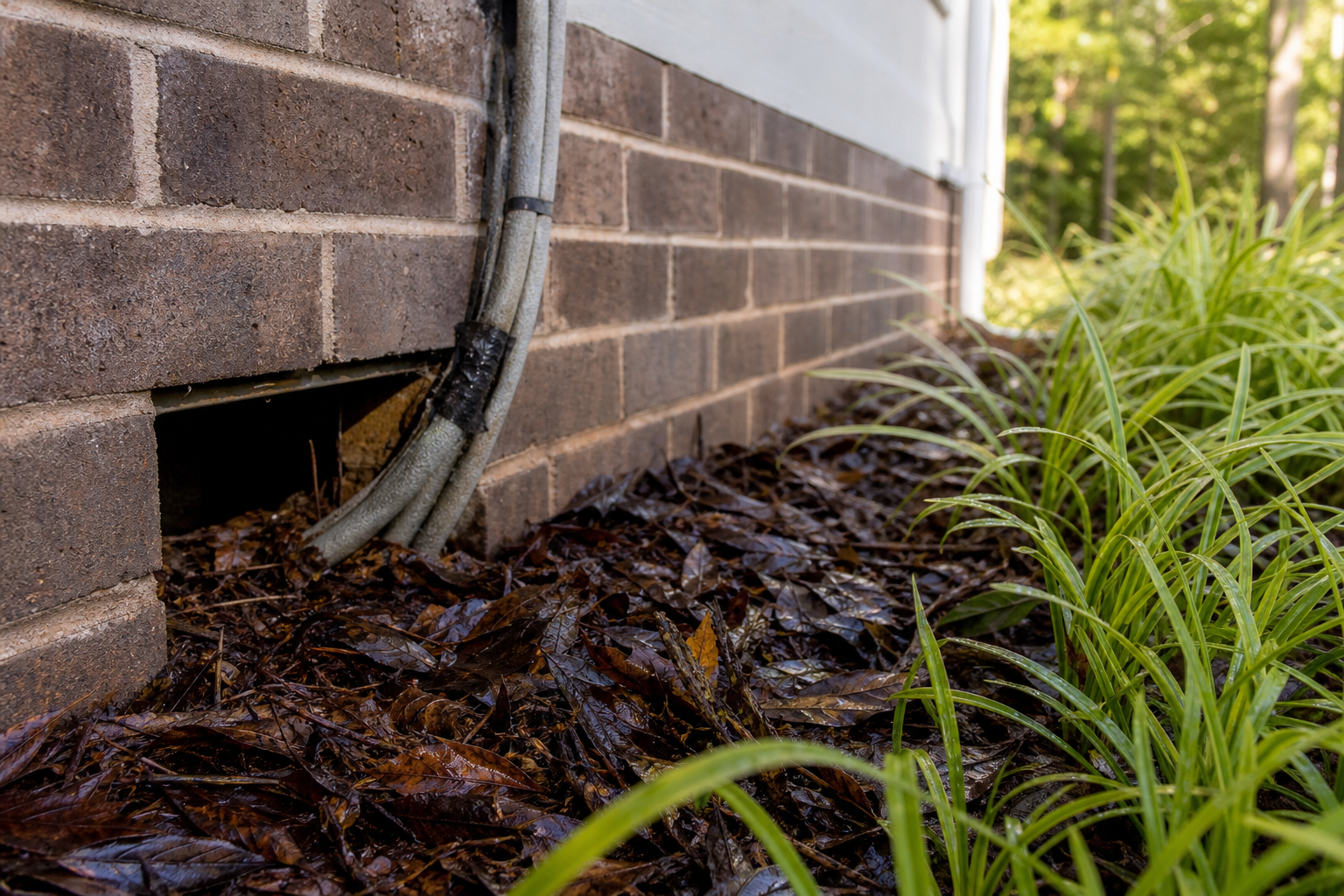
Foundation edges deserve a walk-around look for gaps, cracks, or damp soil touching the structure. Note any spots where mulch sits high against the wall or where water drains slowly. These conditions often relate to areas where millipedes gather outdoors.
Walk the perimeter of your home and look closely at where the foundation meets the ground. Small gaps or cracks can be worth noting, even if they seem minor. For a wider plan, pair this with pest-proofing your home so the whole property is covered.
Mulch beds piled directly against siding or brick can hold moisture longer than needed. This is a detail worth mentioning during a service conversation.
Take a few photos of any areas that look damp or shaded most of the day. These images give a technician useful visual context ahead of the visit. Homeowners seeing similar pressure can also review residential pest control before scheduling.
What this means for your home
- Practical takeaway: Foundation edges deserve a walk-around look for gaps, cracks, or damp soil touching the structure.
- Boiling Springs service is adjusted to the home style, season, and pressure pattern instead of using the same checklist everywhere.
Why does leaf litter placement affect millipede control planning?
Leaf litter holds moisture and organic matter that millipedes use for shelter and food. Piles left close to a home can create a bridge between outdoor habitat and indoor entry points. Noting where leaf litter accumulates helps frame the scope of a service visit.
Millipedes feed on decaying plant material, so leaf piles near a foundation can become gathering spots. This is especially true after rain when the litter stays damp longer. This connects closely with Upstate SC service areas when you are comparing next steps.
If leaf litter is left against a wall for weeks, it may support ongoing activity nearby. Clearing it back a short distance can reduce that closeness to the structure.
Share details about where leaf litter tends to build up, including corners, flower beds, or shaded areas. This helps a technician understand the outdoor conditions at play. For a wider plan, pair this with kids and pets pest control safety so the whole property is covered.
What this means for your home
- Practical takeaway: Leaf litter holds moisture and organic matter that millipedes use for shelter and food.
Should thresholds and door sweeps be checked before service begins?
Yes. Thresholds, door sweeps, and window seals are common entry points for millipedes moving indoors. A quick check for gaps or worn weatherstripping gives useful information to share during scheduling. This step takes only a few minutes and needs no special tools.
Millipedes are small enough to fit through narrow gaps under doors or around window frames. Worn door sweeps or cracked seals can allow easier access during wet periods. Homeowners seeing similar pressure can also review requesting service from Paladin before scheduling.
Walk through your home and check each exterior door for daylight showing underneath. Note any spots where the sweep looks thin or damaged.
Windows on the ground floor deserve the same attention, especially older frames. A simple list of doors and windows with visible gaps is a helpful starting point. This connects closely with pest-proofing your home when you are comparing next steps.
What this means for your home
- Practical takeaway: Yes.
- window seal entry points
What should a professional millipede control inspection document?
A thorough inspection typically documents moisture sources, foundation conditions, leaf litter placement, and entry points around the home. This record helps establish a baseline and supports any follow-up recommendations. Homeowners can expect the visit to focus on these observable details rather than guesswork.
An inspection generally starts outdoors, reviewing grading, drainage, and areas where organic debris collects. These notes help connect outdoor conditions to indoor activity. For a wider plan, pair this with residential pest control so the whole property is covered.
Indoors, a technician may look at baseboards, thresholds, and areas near ground-level walls where millipedes are often reported. Documentation supports a clearer service scope.
Sharing your own notes on rain timing and sightings ahead of the visit can make this documentation process more efficient for everyone involved. Homeowners seeing similar pressure can also review requesting service from Paladin before scheduling.
What this means for your home
- Documentation should summarize findings, treated areas, product locations where applicable, and the recommended follow-up plan.
- Boiling Springs service is adjusted to the home style, season, and pressure pattern instead of using the same checklist everywhere.
- Practical takeaway: A thorough inspection typically documents moisture sources, foundation conditions, leaf litter placement, and entry points around the home.
Which findings can change the millipede control service scope?
Findings such as persistent moisture, multiple entry points, or heavy leaf litter accumulation can shift the scope of a service visit. Each property is different, so the details gathered beforehand help align the plan with what is actually observed on site.
If moisture issues are widespread, a broader review of drainage and grading may become part of the conversation. This is different from a single entry point needing attention. This connects closely with kids and pets pest control safety when you are comparing next steps.
Multiple entry points across doors and windows may call for a wider review of exterior seals. Sharing your notes helps identify these patterns early.
Outcomes vary depending on property layout and conditions. A flexible scope allows the service to match what the inspection actually reveals. For a wider plan, pair this with residential pest control so the whole property is covered.
What this means for your home
- Practical takeaway: Findings such as persistent moisture, multiple entry points, or heavy leaf litter accumulation can shift the scope of a service visit.
When is the right time to schedule millipede control after rain?
Many homeowners choose to schedule service once indoor activity forms a repeated pattern tied to rain rather than a single sighting. Waiting for that clearer pattern gives the inspection more useful context and helps set realistic expectations for the scope of the visit itself.
A single millipede indoors after a storm may not indicate an ongoing issue. Repeated sightings across multiple rain events are a stronger signal worth acting on. Homeowners seeing similar pressure can also review pest-proofing your home before scheduling.
Scheduling during a stretch of consistent weather, rather than during an active storm, can make outdoor inspection easier and safer.
Contacting a provider once you have a few weeks of observations gives the visit more context and helps set realistic expectations for the scope of work. This connects closely with kids and pets pest control safety when you are comparing next steps.
What this means for your home
- when to schedule millipede control
- Practical takeaway: Many homeowners choose to schedule service once indoor activity forms a repeated pattern tied to rain rather than a single sighting.
Family-first by design
We ask who lives in the house before we pick a product
Babies, pregnancies, asthma, immune conditions, pet medical issues, garden beds, beehives, they all change the visit. Paladin treats harborage where pests live, not the surfaces kids and pets touch.
Every visit names what was used, where, and when the area is back to normal. If a different approach is the actual answer, we say so.
Why this post exists on the Paladin blog
This post was written by someone who actually does this work on Upstate homes, not by a contractor or a marketing team that has never seen the species in person. The Paladin blog exists to answer the questions we hear on real service calls, honestly, in plain English, without selling you a service you do not need. If a post helps you solve the problem on your own, that is a successful post for us. If you read it and decide you would rather have a trained technician on site, that is what the phone is for. Either path is fine.
A first Paladin visit is intended to document the activity, inspect relevant areas, and explain the proposed scope before work begins. Appointment timing and the exact inspection areas depend on the request and property access. Call (864) 816-7658 or use the contact form so the office can confirm the current options.
Paladin is based in Boiling Springs, SC and serves the approved Upstate locations listed on this site. Each recommendation should be tied to conditions documented at the property, including pest evidence, moisture, entry points, food, water, shelter, and access. The office confirms address availability without promising a route frequency or response window.
Keep exploring Paladin
Related Paladin services and guides for Upstate homeowners.
Frequently asked questions
What details help most when requesting millipede control in Boiling Springs, SC?
Notes on recent rain timing, foundation gaps, leaf litter locations, and threshold conditions are all useful details to gather. These observations give a technician a clearer starting point and help align the inspection with what you have actually noticed happening around your own home.
Can leaf litter near my foundation attract millipedes?
Leaf litter holds moisture and organic material that millipedes rely on for shelter and food sources. Piles left close to exterior walls, especially after rain, can create favorable conditions nearby. Clearing debris back a short distance from the wall may reduce that closeness to the home.
How often should I check thresholds and door sweeps for gaps?
Checking thresholds and door sweeps a few times a year, and especially after wet seasons, is a reasonable habit to build. Small gaps can develop over time as weatherstripping wears down, so periodic checks help you note changes before scheduling a service visit.
Does every millipede sighting indoors mean I need service right away?
Not necessarily, since a single millipede indoors after rain does not always indicate an ongoing issue at the property. Tracking sightings over a few weeks helps show whether a real pattern exists, which gives more useful context for scheduling any future service.
What should I expect a professional inspection to cover?
An inspection generally reviews outdoor moisture sources, foundation conditions, leaf litter placement, and entry points like doors and windows around the structure. This documentation helps establish a scope of service based on what is actually observed at the property during that visit.
Ready to shield your family?
One call to Paladin and we’ll meet you where you are, from a quick walk-through to a long-term protection plan.