Upstate South Carolina · Pest control for homes with kids and pets
Integrated Pest Management for Upstate SC Homes: A Decision Framework
Integrated Pest Management turns pest evidence into a decision by moving through defined steps: correct identification, monitoring over time, comparing findings to an action threshold, applying prevention and habitat changes…
- Low-disruption applications focused on cracks, voids, and entry points
- Reachable techs, text us, call us, we answer
- Quarterly programs or one-time visits, your call
Quick Answer
Integrated Pest Management turns pest evidence into a decision by moving through defined steps: correct identification, monitoring over time, comparing findings to an action threshold, applying prevention and habitat changes first, using targeted control only when warranted, and documenting results so the plan can be reviewed and adjusted. Homeowners can observe and record conditions safely, but identification, treatment decisions, and exclusion work belong to the service side of the process.
For the next step, compare Paladin pest control services, read about Upstate SC service areas, or check where Paladin works across Upstate SC.
Key Takeaways
- IPM is a sequence, not a single visit: identification, monitoring, thresholds, prevention, targeted control, and review.
- Homeowners can safely observe and log conditions without diagnosing a pest problem or a structural cause.
- An action threshold, not a single sighting, is what separates routine monitoring from a treatment decision.
- Prevention and minor exclusion work often reduce pressure before any control step is considered.
- Service documentation is what allows an IPM plan to be reviewed and adjusted over time.
- Paladin Pest Solutions offers Integrated Pest Management alongside multi-point inspections, rodent control, entry-point sealing, and wildlife removal for approved Upstate SC locations.
What does Integrated Pest Management actually mean for an Upstate SC home?
IPM is a decision process built on evidence, not a fixed spray schedule, and it treats pest control as one option among several.
The U.S. Environmental Protection Agency describes Integrated Pest Management as an approach that uses information about pest life cycles and their interaction with the environment, combined with available control methods, to manage pests in a way that minimizes risk to people and the surroundings. That framing matters for a home in the Upstate, because it means the process starts with information gathering, not with a product decision. This connects closely with residential pest control when you are comparing next steps.
In practice, this shifts the homeowner's role from expecting a single fix to expecting a sequence: someone identifies what is actually present, observes it over time, compares that activity to a reasonable threshold, and only then considers whether a targeted control step is warranted. Prevention and habitat changes are considered throughout, not as an afterthought.
This matters because Upstate homes vary widely in age, construction, landscaping, and moisture exposure. A framework that starts with evidence rather than an assumption is better suited to that variation than a one-size approach would be. For a wider plan, pair this with Upstate SC service areas so the whole property is covered.
For homeowners searching for Integrated Pest Management Upstate SC homes can rely on, the evidence boundary is the first thing to understand: what can be observed and recorded by a resident, and what requires trained inspection or treatment decisions.
What this means for your home
- Practical takeaway: IPM is a decision process built on evidence, not a fixed spray schedule, and it treats pest control as one option among several.
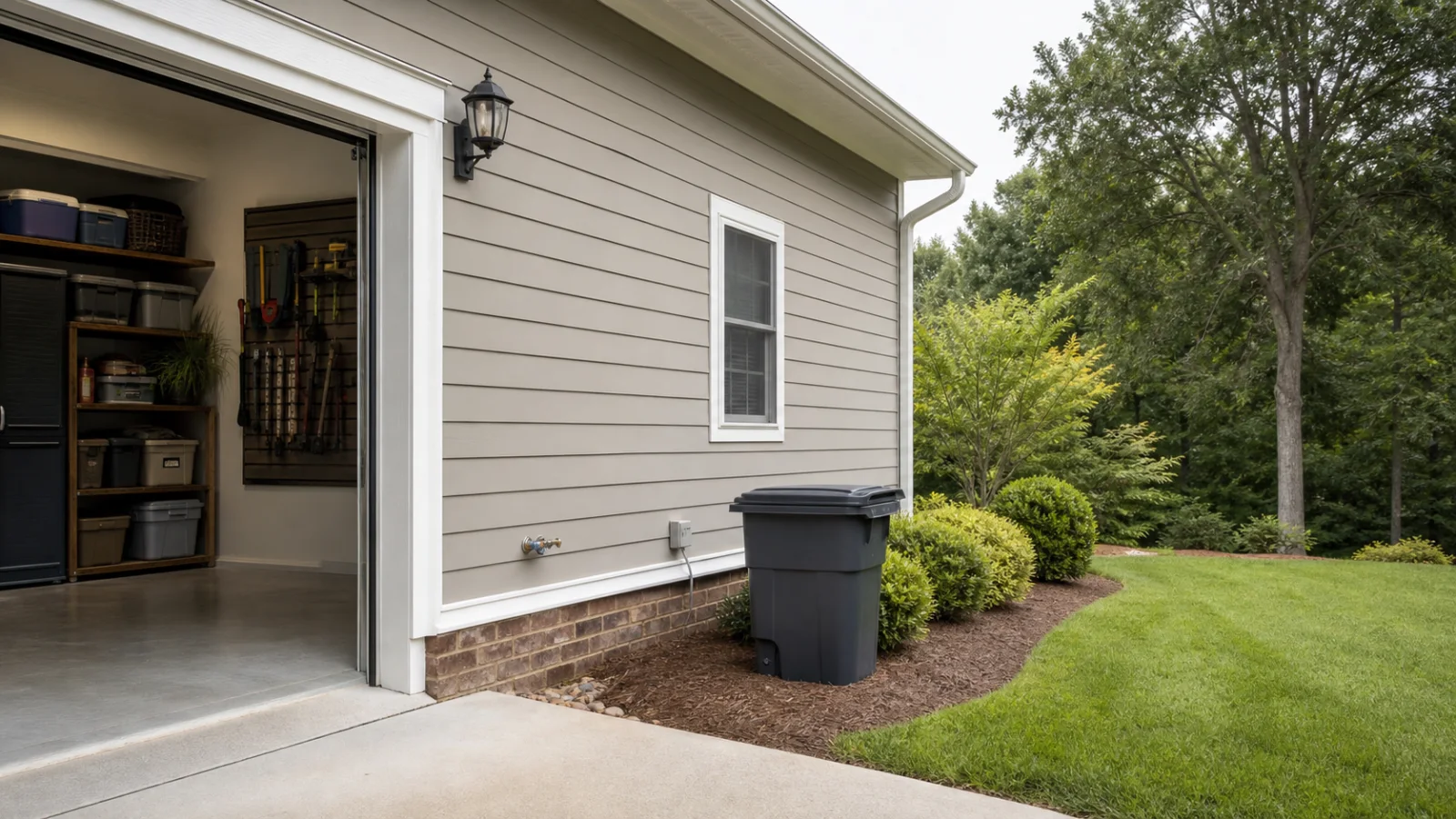
Why does pest behavior matter more than a single sighting?
One sighting tells you a pest was present once; behavior and pattern over time tell you whether a response is warranted.
EPA's introduction to Integrated Pest Management describes it as an ongoing process rather than a one-time event, with monitoring used to track pest activity and inform decisions. A single insect or dropping found once does not establish a pattern, and treating every isolated sighting the same way as recurring activity can lead to unnecessary steps. Homeowners seeing similar pressure can also review kids and pets pest control safety before scheduling.
This is part of why identification matters before any decision is made. The Clemson Cooperative Extension Home and Garden Information Center notes, in its guidance on cockroach control, that correct identification of the species involved affects which control measures are appropriate and how the biology of that pest should be understood before acting.
For a homeowner, this means resisting the urge to treat a single occurrence as proof of an infestation, while also not ignoring a pattern that repeats in the same area of the home over several days or weeks. The distinction between an isolated event and a recurring one is exactly what monitoring is designed to capture. This connects closely with requesting service from Paladin when you are comparing next steps.
This is also where an Integrated Pest Management Upstate SC checklist becomes useful, because it gives a homeowner a consistent way to note date, location, and quantity rather than relying on memory or a single impression.
What this means for your home
- Practical takeaway: One sighting tells you a pest was present once; behavior and pattern over time tell you whether a response is warranted.
Does a single pest sighting mean a home needs treatment right away?
Not necessarily. A single sighting is one data point. IPM relies on monitoring over time and comparing activity to a threshold before deciding whether a targeted response is warranted.
Ready for a straight answer?
Call or message, we'll listen first and recommend only what fits your home.
What can a homeowner safely observe before calling for service?
Homeowners can note location, timing, quantity, and conditions like moisture or food sources, without attempting to identify species or apply any control product.
Useful observation does not require expertise. A homeowner can record where activity was seen (kitchen, garage, along a baseboard), what time of day it occurred, and roughly how many individuals or signs were present. Photographs taken from a safe distance, without disturbing the area, can also support later identification by someone trained to do so. For a wider plan, pair this with pest-proofing your home so the whole property is covered.
Conditions around the home are equally worth noting. Standing water, exposed food, cluttered storage areas, and gaps around doors or utility lines are all environmental factors that IPM guidance treats as relevant context, since EPA's citizen guidance on pest control and pesticide safety points out that reducing food, water, and shelter access is a foundational step in any pest management approach.
What a homeowner should not attempt is diagnosing the pest species, guessing at an infestation's extent, or applying any pesticide product based on a single observation. Those steps belong later in the process, after identification and monitoring have established a pattern worth acting on. Homeowners seeing similar pressure can also review residential pest control before scheduling.
A simple log kept over one or two weeks, even a few lines in a notebook or phone, gives far more useful information to a service provider than a single description offered from memory.
What this means for your home
- Practical takeaway: Homeowners can note location, timing, quantity, and conditions like moisture or food sources, without attempting to identify species or apply any control product.
- Documentation should summarize findings, treated areas, product locations where applicable, and the recommended follow-up plan.
Where is the line between prevention, identification, treatment, and repair?
Prevention and minor upkeep are homeowner responsibilities; identification and treatment decisions require trained judgment; structural repair sits alongside both, addressed as needed.
Prevention includes things like keeping food sealed, reducing clutter, managing moisture, and maintaining yard debris away from the foundation. These are ongoing homeowner tasks that reduce the conditions pests need, and EPA's IPM principles list habitat modification as a core, non-chemical control tactic that should be considered before any product-based step. This connects closely with Upstate SC service areas when you are comparing next steps.
Identification is different. Confirming which species is present, and understanding its biology and habits, is the step that determines whether a threshold has been crossed and what kind of response, if any, fits the situation. Clemson's cockroach guidance illustrates this directly: different species behave differently, so identification changes the recommended approach.
Treatment decisions follow identification and monitoring, and they are made by whoever is providing the service, based on the evidence gathered rather than on assumption. Repair work, such as sealing an entry point or addressing an exclusion gap, often overlaps with prevention but may also require more involved work depending on the finding. For a wider plan, pair this with kids and pets pest control safety so the whole property is covered.
Keeping these categories distinct helps a homeowner understand what they can reasonably do themselves, what requires an inspection, and what might involve a repair or exclusion step separate from any pest control action.
What this means for your home
- Practical takeaway: Prevention and minor upkeep are homeowner responsibilities; identification and treatment decisions require trained judgment; structural repair sits alongside both, addressed as needed.
What role do monitoring and action thresholds play in the decision?
Monitoring establishes a pattern over time, and an action threshold is the point at which that pattern is judged to warrant a targeted response.
EPA describes monitoring as an ongoing part of the IPM process, used to track pest presence and activity so that decisions are based on data rather than reaction to a single event. For a home, this might mean noting activity across several visits to the same area rather than responding the first time something is seen. Homeowners seeing similar pressure can also review requesting service from Paladin before scheduling.
An action threshold is the concept that not every observation calls for the same response. A threshold is the point, informed by the pest's behavior and the conditions of the property, at which continued monitoring is no longer sufficient and a more direct step becomes reasonable. This concept is central to how EPA frames IPM as distinct from routine, calendar-based pesticide application.
Because thresholds depend on species, location, and pattern, they are not something a homeowner should try to set independently. They are part of the judgment that trained inspection and monitoring are meant to inform, using the evidence gathered from both the homeowner's log and any professional observation. This connects closely with pest-proofing your home when you are comparing next steps.
Understanding that a threshold exists, even without knowing exactly where it sits for a given situation, helps a homeowner interpret why a provider might recommend continued monitoring in one case and a more direct step in another.
What this means for your home
- Practical takeaway: Monitoring establishes a pattern over time, and an action threshold is the point at which that pattern is judged to warrant a targeted response.
How does documentation turn one visit into an ongoing plan?
Written notes from each visit, whether kept by the homeowner or the provider, are what let a single observation become part of a reviewable plan.
A single service visit produces a snapshot. Documentation, whether it is service notes, photographs, or a homeowner's own log, is what allows that snapshot to be compared against future ones. Without notes, it becomes difficult to know whether conditions are improving, staying the same, or changing in a way that calls for a different approach. For a wider plan, pair this with residential pest control so the whole property is covered.
Good documentation typically records what was observed, where, and when, along with any conditions noted around the property, such as moisture sources or points of entry. This aligns with the EPA's framing of IPM as a process that relies on ongoing information rather than a single assessment.
For homeowners, keeping even a basic record of dates and observations between service visits gives a provider more to work with at the next visit and helps clarify whether earlier prevention steps have had any effect. Homeowners seeing similar pressure can also review requesting service from Paladin before scheduling.
This is also where a homeowner can ask direct questions of a provider, such as what was found, what threshold or pattern informed a decision, and what the plan is for the next review, without needing technical expertise to follow along.
What this means for your home
- Documentation should summarize findings, treated areas, product locations where applicable, and the recommended follow-up plan.
- Practical takeaway: Written notes from each visit, whether kept by the homeowner or the provider, are what let a single observation become part of a reviewable plan.
When does an Upstate SC home need a service like Paladin's Integrated Pest Management?
When observations, patterns, and conditions suggest that prevention alone is not enough, a service that combines inspection, identification, and targeted response is the appropriate next step.
Paladin Pest Solutions, based in Boiling Springs, SC, offers Integrated Pest Management as one of its listed capabilities, alongside multi-point inspections, rodent control, entry-point sealing and exclusion work, and wildlife removal, for approved locations across Upstate South Carolina. Availability for a specific address is confirmed by the office rather than assumed from a general service area. This connects closely with kids and pets pest control safety when you are comparing next steps.
A homeowner who has kept an observation log, noticed a recurring pattern rather than a single event, and addressed the prevention basics they can control is in a good position to bring that information into a conversation about service. That evidence is what allows an inspection to be efficient and the identification step to be accurate.
This is also the point where the categories discussed earlier, prevention, identification, treatment, and repair, come together as a single coordinated plan rather than separate, disconnected efforts. Multi-point inspection and exclusion work in particular often address the same conditions that support prevention, closing gaps between what a homeowner can do and what requires trained work. For a wider plan, pair this with residential pest control so the whole property is covered.
Homeowners considering Integrated Pest Management Upstate SC services can use their own documentation as the starting point for that conversation, whether the concern involves general pest activity, rodents, or an entry point that needs sealing.
What this means for your home
- Practical takeaway: When observations, patterns, and conditions suggest that prevention alone is not enough, a service that combines inspection, identification, and targeted response is the appropriate next step.
What happens after a service visit, and how is a plan adjusted?
Outcomes are reviewed against the documentation from prior visits, and the plan is adjusted based on whether conditions are trending in the expected direction.
IPM does not end after a single visit. EPA's framing treats review as an ongoing part of the cycle, where findings from monitoring and any control steps taken are compared to earlier records to judge whether the approach is working or needs adjustment. Homeowners seeing similar pressure can also review pest-proofing your home before scheduling.
For a homeowner, this means asking what changes, if any, are expected before the next visit, and what would indicate that a different approach is warranted. It also means understanding that outcomes vary by property, pest type, and how consistently prevention steps are maintained between visits.
Adjustment might involve more frequent monitoring, additional exclusion work, or a change in the areas being inspected, depending on what the documented pattern shows. It should always be grounded in the evidence gathered rather than a default assumption that more of the same step is the only option. This connects closely with kids and pets pest control safety when you are comparing next steps.
This review step is also where a homeowner's own notes remain useful long after the first visit, since they provide an independent record that can be compared against service documentation over time.
What this means for your home
- Practical takeaway: Outcomes are reviewed against the documentation from prior visits, and the plan is adjusted based on whether conditions are trending in the expected direction.
- Service notes should tell you what was found, what was treated, and what to watch for before the next visit.
Family-first by design
We ask who lives in the house before we pick a product
Babies, pregnancies, asthma, immune conditions, pet medical issues, garden beds, beehives, they all change the visit. Paladin treats harborage where pests live, not the surfaces kids and pets touch.
Every visit names what was used, where, and when the area is back to normal. If a different approach is the actual answer, we say so.
Keep exploring Paladin
Related Paladin services and guides for Upstate homeowners.
Frequently asked questions
Can a homeowner identify the pest species themselves?
Homeowners can observe and photograph activity, but confirming species identification is part of the trained evaluation step in an IPM process, since different pests require different considerations.
What is an action threshold in simple terms?
It is the point at which observed pest activity and pattern are judged significant enough to warrant a more direct response, rather than continued monitoring alone.
Is Integrated Pest Management the same as routine spraying?
No. IPM is a process that starts with identification and monitoring and considers prevention and habitat changes before any targeted control step is considered.
Does Paladin Pest Solutions serve every Upstate SC address?
Paladin serves approved locations across Upstate South Carolina from its base in Boiling Springs, SC. Availability for a specific address is confirmed by the office.
Ready to shield your family?
One call to Paladin and we’ll meet you where you are, from a quick walk-through to a long-term protection plan.