Upstate South Carolina · Local pest crew, plain-English answers
Fleas and Ticks: From Yard to Sofa in Boiling Springs, SC
Fleas and ticks almost always start outside, in the shady, humid edges of a Boiling Springs yard. They climb onto a pet or a pant leg, ride indoors, and then fleas drop eggs into your carpet, sofa, and pet bedding where the next…
- Low-disruption applications focused on cracks, voids, and entry points
- Reachable techs, text us, call us, we answer
- Quarterly programs or one-time visits, your call
Quick Answer
Fleas and ticks almost always start outside, in the shady, humid edges of a Boiling Springs yard. They climb onto a pet or a pant leg, ride indoors, and then fleas drop eggs into your carpet, sofa, and pet bedding where the next generation hatches. Breaking that chain takes three things working together: treating the yard's hot spots, keeping pets on a vet-recommended preventive, and treating the indoor areas where eggs and larvae hide. Skip any one of those and the problem keeps cycling back all season.
For the next step, compare flea and tick control, read about yard pest prevention, or check where Paladin works across Upstate SC.
Key Takeaways
- Fleas and ticks live outdoors first; the indoor problem is almost always carried in from the yard.
- Only a small fraction of a flea infestation is the adults you see; most are eggs, larvae, and pupae in carpet and bedding.
- Ticks wait at the tips of grass and brush along yard edges and latch onto whatever brushes past.
- Year-round pet preventives from your veterinarian are the single most effective link in the chain.
- Lasting control treats the yard, the pet, and the home together rather than any one of them alone.
How do fleas and ticks actually get from my yard to my sofa?
They hitch a ride. Fleas and ticks wait in the shady, humid parts of your yard, climb aboard a pet or a person who brushes past, and travel indoors. Once inside, fleas lay eggs that fall off into carpet, pet beds, and upholstery, so the sofa becomes a nursery for the next generation.
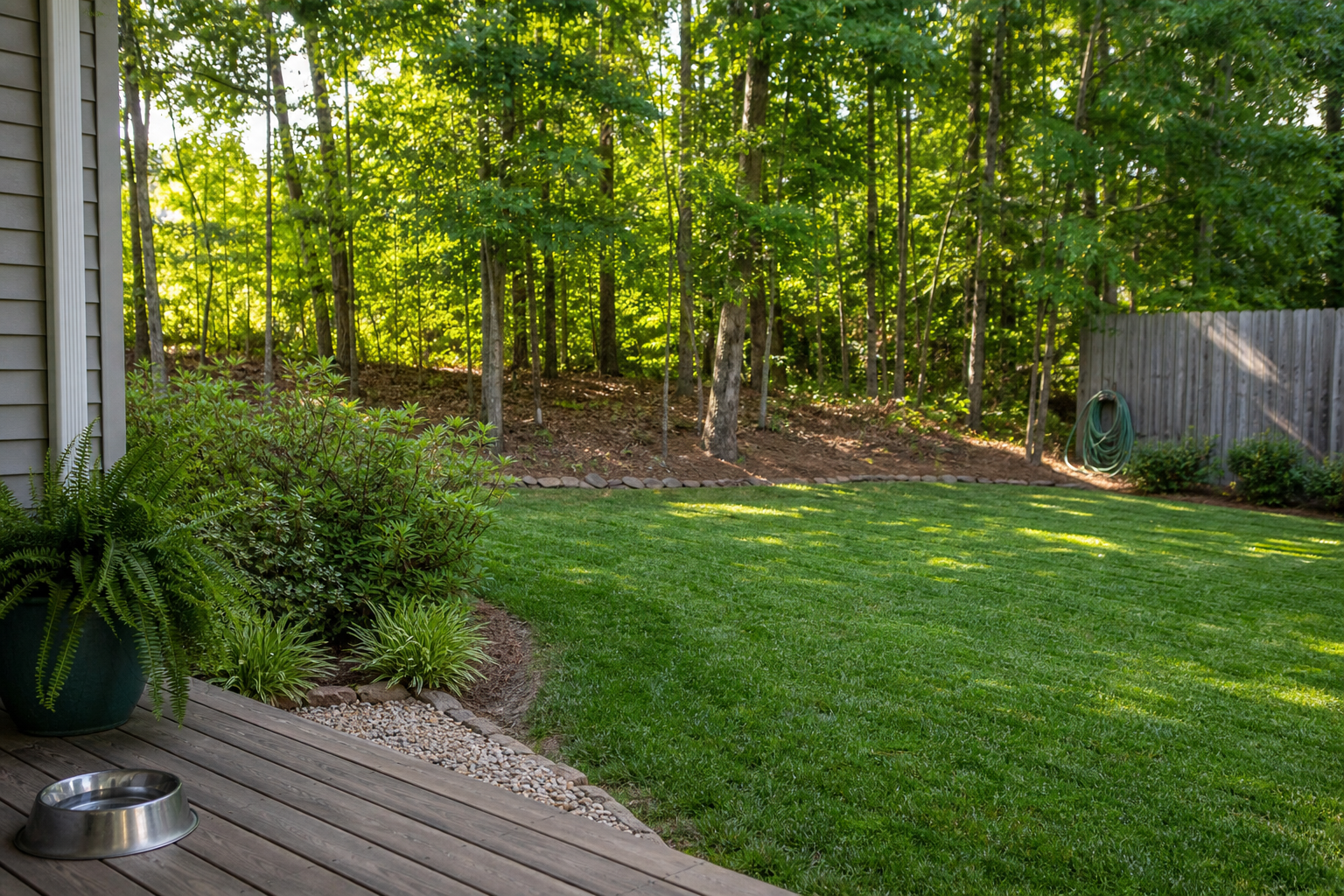
The journey almost always begins outdoors. In Boiling Springs, the shady strip where the lawn meets the woods, the mulch beds along the foundation, and the cool space under a deck all hold the moisture fleas and ticks need to survive. A flea cannot fly, so it waits for a warm-blooded host to pass within jumping range, then leaps aboard. A tick climbs to the tip of a grass blade or a low branch, holds its front legs out, and grabs whatever brushes by, a behavior called questing. Your dog trotting the fence line or you walking to the shed is the bridge they are waiting for. This connects closely with flea and tick control when you are comparing next steps.
Once a flea is on a pet and indoors, the real trouble starts. An adult female flea begins laying eggs within a day or two, and those eggs are smooth and dry, so they roll off the animal and scatter wherever the pet sleeps, rests, and walks. That means your sofa, the carpet, the cracks in the floor, and the pet's bed become seeded with eggs that hatch into larvae and eventually new biting adults. The U.S. Centers for Disease Control and Prevention's overview of fleas and the diseases they can carry is a solid, plain-language reference on why this cycle is worth taking seriously rather than waiting out.
Ticks behave a little differently once indoors. They do not infest a home the way fleas do, but a tick carried in on a pet or a pant leg can drop off, wander, and attach to a person hours later, which is why a tick found crawling on the couch should never be ignored. Understanding this yard-to-sofa pathway is the whole game, because it tells you that treating only what you can see indoors will never be enough. Our overview of flea and tick control for Upstate homes walks through how a professional approaches the full pathway rather than just the visible pests.
What this means for your home
- Boiling Springs service is adjusted to the home style, season, and pressure pattern instead of using the same checklist everywhere.
- Practical takeaway: They hitch a ride.
- Family and pet awareness means we explain treated areas, re-entry timing, and simple prep steps before work begins.

Why does my flea problem keep coming back after I treat the pet?
Because treating the pet only kills the adult fleas riding on it, and adults are a small slice of the infestation. The eggs, larvae, and dormant pupae hidden in your carpet, sofa, and pet bedding keep hatching for weeks, re-infesting the pet again and again until you break the whole cycle.
Pest professionals often describe a flea infestation with a simple rule of thumb: the adult fleas you can see are roughly five percent of the population, while the eggs, larvae, and pupae you cannot see make up the other ninety-five percent. So when you treat only the dog or cat, you knock down that visible five percent while the hidden majority keeps maturing in your home. Within days, freshly hatched adults jump back onto the pet and it looks like the treatment failed, when in reality the indoor reservoir was never addressed. Homeowners seeing similar pressure can also review yard flea treatment before scheduling.
The pupal stage is the sneakiest part. A flea pupa is wrapped in a sticky, protective cocoon that shrugs off many treatments, and it can lie dormant in your carpet or under the sofa cushions for weeks, waiting for the vibration, warmth, and carbon dioxide that signal a host is near. This is why people sometimes return from vacation to a sudden surge of fleas: the dormant pupae all hatched at once when the family and pets came home. No single spray reaches every pupa, which is why timing and repetition matter so much.
Reinfestation from the yard is the other half of the loop. Even a perfectly treated home gets re-seeded every time the pet goes outside into untreated flea habitat and carries new hitchhikers back in. That is exactly why a durable fix has to treat the yard, the pet, and the home as one connected system. Pairing professional treatment with steady home pest prevention habits keeps the indoor reservoir from rebuilding between visits.
What this means for your home
- Practical takeaway: Because treating the pet only kills the adult fleas riding on it, and adults are a small slice of the infestation.
- Family and pet awareness means we explain treated areas, re-entry timing, and simple prep steps before work begins.
Can fleas live in my house without pets?
Yes, for a while. Fleas prefer animal hosts, but they can bite people and survive on a temporary blood meal, and dormant pupae can persist in carpet for weeks. A home that recently lost or rehomed a pet can still have an active flea population.
Ready for a straight answer?
Call or message, we'll listen first and recommend only what fits your home.
What is the safest way to treat fleas and ticks around kids and pets?
Layer the safest-first tools: a vet-recommended preventive on the pet, thorough vacuuming and hot-water washing of bedding indoors, and a targeted exterior treatment of the shady yard edges where fleas and ticks live. Keep children and pets off treated areas until they are dry, and always follow the product label.
The most important and family-friendly tool is also the simplest: a year-round flea and tick preventive prescribed by your veterinarian. These modern preventives are designed for the specific weight and species of your pet, and they break the cycle right at the source by killing fleas before they can lay viable eggs. Because they are applied directly to the animal under veterinary guidance, they avoid broadcasting product across your living space. If you want the broader framework for choosing lower-impact approaches in a home with children and pets, our guide on keeping kids and pets safe during pest control lays out the questions to ask before anything is applied.
Indoors, mechanical control does a surprising amount of the work safely. Vacuuming carpets, rugs, and the sofa, especially along baseboards and under cushions, physically removes eggs, larvae, and even stimulates dormant pupae to emerge where the next treatment can reach them. Washing all pet bedding in hot water and drying it on high heat destroys every life stage in one pass. Doing this consistently for several weeks, in step with any treatment, is what actually drains that hidden ninety-five percent. When products are used, the U.S. EPA explains why it is essential to choose and use flea and tick products carefully around your home and pets, and the label is the legal instruction set for safe application and re-entry timing.
Outdoors, the goal is precision, not blanketing the whole yard. Fleas and ticks concentrate in predictable shady, humid micro-habitats, so a targeted treatment of those edges, bed lines, and under-deck spaces does far more than soaking the open sunny lawn where these pests rarely survive. Keeping kids and pets off any treated zone until it has dried is a simple, reliable safety step that follows the label every time. Homeowners seeing similar pressure can also review requesting service from Paladin before scheduling.
What this means for your home
- Family and pet awareness means we explain treated areas, re-entry timing, and simple prep steps before work begins.
- The plan is adjusted for the home type and pest pressure instead of forcing a generic pest control checklist.
- Practical takeaway: Layer the safest-first tools: a vet-recommended preventive on the pet, thorough vacuuming and hot-water washing of bedding indoors, and a targeted exterior treatment of the shady yard edges where fleas and ticks live.
- Targeted treatment focuses on cracks, voids, exterior edges, nesting areas, and travel paths instead of blanket-spraying open surfaces.

What are the top steps to break the flea and tick cycle?
Treat the pet, the home, and the yard together, in a deliberate order, and keep it up long enough to outlast the hidden life stages. The following sequence is the same logic a professional follows, scaled to a homeowner handling the basics.
Here is the order that actually breaks the yard-to-sofa cycle on Boiling Springs properties, from first move to last: This connects closely with Upstate SC service areas when you are comparing next steps.
- Start the pet on a vet preventive. Talk to your veterinarian and get every pet in the home on a year-round flea and tick product before you do anything else.
- Vacuum everything, often. Hit carpets, rugs, the sofa, baseboards, and under furniture daily at first, and empty the canister or bag outside each time.
- Wash all bedding hot. Launder pet beds, throw blankets, and washable cushion covers in hot water and dry on high heat to kill every life stage.
- Treat the indoor hot spots. Focus any indoor treatment where the pet sleeps and rests, since that is where eggs and larvae concentrate.
- Target the yard edges. Treat the shady, humid borders, mulch beds, and under-deck areas where fleas and ticks actually live, not the open lawn.
- Cut the habitat. Mow regularly, rake leaf litter, trim back overgrown edges, and clear brush to dry out the micro-habitats these pests need.
- Repeat and stay consistent. Keep up the routine for several weeks so you outlast the dormant pupae, then maintain the pet preventive year-round.
Most Boiling Springs households that follow this combined routine see the problem fade within a few weeks rather than dragging on all summer. The mistake nearly everyone makes is treating only one link, usually just the pet, and then wondering why the fleas return. Pairing this routine with broader home pest-proofing habits keeps the yard from re-seeding the house in the first place, and a steady preventative pest control rhythm keeps the exterior pressure low through the warm months.
What this means for your home
- Practical takeaway: Treat the pet, the home, and the yard together, in a deliberate order, and keep it up long enough to outlast the hidden life stages.
- Family and pet awareness means we explain treated areas, re-entry timing, and simple prep steps before work begins.
- Boiling Springs service is adjusted to the home style, season, and pressure pattern instead of using the same checklist everywhere.

When should a Boiling Springs homeowner call a professional?
Call when the infestation persists despite weeks of consistent home and pet treatment, when family members are getting bitten, when ticks keep showing up indoors, or when you simply want a coordinated plan that treats the yard, home, and timing together instead of guessing. A professional reaches the hot spots and stages you cannot.
There is no shame in tackling fleas and ticks yourself, and the vacuum-plus-vet-preventive routine resolves many cases. But some situations warrant a call. If you have been diligent for several weeks and still see fleas, the hidden reservoir or the yard reinfestation may be outpacing your efforts, and a coordinated treatment with the right timing solves what scattered DIY cannot. If anyone is being bitten or you are pulling ticks off pets repeatedly, the health calculus changes and professional help is worth it. Homeowners seeing similar pressure can also review requesting service from Paladin before scheduling.
A professional flea and tick program for an Upstate yard is about precision and timing, not constant spraying. We identify the shady, humid micro-habitats where these pests breed, treat those edges and the indoor hot spots in the right sequence, and time follow-ups to catch the pupae as they emerge from dormancy. Because we treat the connected system rather than chasing visible adults, the population collapses and stays down instead of rebounding after the next warm, damp week. You can see how flea and tick work fits into our broader Upstate pest control services and how we serve the area on the Boiling Springs pest control page.
We are happy to help. Call (864) 816-7658 or email info@paladinpestsolutions.com. We service Boiling Springs, Spartanburg, Greenville, Taylors, Fountain Inn, Piedmont, Travelers Rest, Landrum, Simpsonville, Lyman, Duncan, Greer, Roebuck, Gaffney, Cowpens, and Chesnee. This connects closely with family flea and tick protection when you are comparing next steps.
What this means for your home
- Boiling Springs service is adjusted to the home style, season, and pressure pattern instead of using the same checklist everywhere.
- Practical takeaway: Call when the infestation persists despite weeks of consistent home and pet treatment, when family members are getting bitten, when ticks keep showing up indoors, or when you simply want a coordinated plan that treats…
- when to call pest control fleas
How do I keep fleas and ticks from coming back next season?
Keep every pet on a year-round preventive, keep the yard's shady edges trimmed and dry, vacuum and wash bedding on a routine, and stay slightly ahead of the warm, humid stretches when pressure spikes. Prevention is mostly about denying these pests the moist habitat and the free ride indoors.
The households that stay flea- and tick-free are not the ones with the single strongest treatment; they are the ones that never let the cycle restart. A year-round veterinary preventive on every pet is the anchor, because it kills hitchhikers before they can seed the home, even in the mild Upstate winters when fleas can persist indoors. Skipping the off-season is how many families end up with a head start on an infestation the following spring. For a wider plan, pair this with flea and tick control so the whole property is covered.
Yard habit does real work too. Fleas and ticks need shade and moisture, so a yard that is mowed, raked free of leaf litter, edged back from the woods, and cleared of brush piles is simply far less hospitable. Moving woodpiles away from the house, thinning dense ground cover, and letting sunlight reach the edges all dry out the exact micro-habitats these pests depend on. Discouraging the wildlife that ferries ticks into a yard, by securing trash and not feeding strays, quietly lowers the pressure as well.
Finally, keep the indoor routine going at a lighter cadence. Regular vacuuming of the sofa, pet resting spots, and carpets removes the occasional egg before it can build into anything, and periodic hot washing of pet bedding keeps the nursery from re-establishing. Combine those small habits with a year-round pet preventive and a tidy, dry yard, and most Boiling Springs homes keep fleas and ticks at the level of a rare nuisance rather than a recurring summer battle. Homeowners seeing similar pressure can also review requesting service from Paladin before scheduling.
What this means for your home
- prevent fleas ticks next season
- Practical takeaway: Keep every pet on a year-round preventive, keep the yard's shady edges trimmed and dry, vacuum and wash bedding on a routine, and stay slightly ahead of the warm, humid stretches when pressure spikes.
- Condition correction lowers repeat pressure by addressing moisture, food sources, harborage, and easy entry points.
- Boiling Springs service is adjusted to the home style, season, and pressure pattern instead of using the same checklist everywhere.
Family and pet protection
Pet-aware flea and tick treatment, yards your kids can use again
Yard fleas and ticks come back when shaded harborage isn't addressed. We treat the shaded perimeter, leaf litter zones, and pet rest areas. Re-entry windows are explicit.
Inside, we coordinate with your vet's pet protection plan. We do not replace the vet, we make the yard safer between treatments.
Keep exploring Paladin
Related Paladin services and guides for Upstate homeowners.
Related Paladin services
Learn more about how Paladin handles this for Upstate families.
Read more →
Learn more about how Paladin handles this for Upstate families.
Read more →
Learn more about how Paladin handles this for Upstate families.
Read more →Learn more about how Paladin handles this for Upstate families.
Read more →Learn more about how Paladin handles this for Upstate families.
Read more →Learn more about how Paladin handles this for Upstate families.
Read more →Frequently asked questions
How long does it take to get rid of fleas in a home?
Usually a few weeks, not a few days. Because eggs, larvae, and dormant pupae hatch over time, consistent vacuuming, hot washing, and treatment must continue long enough to outlast the hidden life stages, typically three to six weeks.
Are ticks in Boiling Springs dangerous?
Some can transmit disease, so any attached tick should be removed promptly and the bite watched. Keeping pets on a preventive and treating shady yard edges reduces the chance of ticks reaching your family in the first place.
Do you offer flea and tick control in Boiling Springs, SC?
Yes. Boiling Springs is part of our Spartanburg County and Upstate service area, and we treat the yard, indoor hot spots, and timing as one connected plan rather than chasing visible pests.
Which Upstate areas do you serve for flea and tick control?
Boiling Springs, Spartanburg, Greenville, Taylors, Fountain Inn, Piedmont, Travelers Rest, Landrum, Simpsonville, Lyman, Duncan, Greer, Roebuck, Gaffney, Cowpens, and Chesnee.
Ready to shield your family?
One call to Paladin and we’ll meet you where you are, from a quick walk-through to a long-term protection plan.