Upstate South Carolina · Pest control for homes with kids and pets
Rodent Exclusion in Simpsonville, SC: Beyond Traps
Trapping clears out the mice and rats already inside your Simpsonville home, but it does nothing about the gaps that let them in, so a fresh group simply follows the same trail a few weeks later. Rodent exclusion is the part most…
- Product placement chosen around kids, pets, and pollinators
- A real Spartanburg crew, not a national call center
- Plain-English findings before any treatment starts
Quick Answer
Trapping clears out the mice and rats already inside your Simpsonville home, but it does nothing about the gaps that let them in, so a fresh group simply follows the same trail a few weeks later. Rodent exclusion is the part most homeowners skip: finding and sealing the entry points, cutting off the food and water that draw rodents to the house, and removing the sheltered spots where they nest. When you pair trapping with real exclusion, you stop replaying the same problem season after season. The smart sequence is to identify why the pressure exists, seal the building envelope, clean up the conditions, and then verify the work held over the following weeks.
For the next step, compare rodent control and exclusion, read about rodent entry-point sealing, or check where Paladin works across Upstate SC.
Key Takeaways
- Traps remove the rodents that are already inside, but they cannot stop new ones from entering through the same unsealed gaps.
- Exclusion means sealing entry points, removing food and water sources, and taking away nesting sites so the home stops inviting rodents back.
- Mice can slip through a gap about the width of a dime, so the openings that matter are usually smaller than people expect.
- The most common entry points are low and easy to miss: gaps around pipes and utility lines, crawl-space vents, garage door corners, and worn weatherstripping.
- A durable result comes from fixing the why behind the pressure first, then sealing the structure, rather than reaching for more traps.
Why does trapping alone fail to stop rodents in Simpsonville?
Trapping only removes the rodents that are already inside; it does nothing about the open gaps, food, water, and shelter that drew them in, so a new group follows the same scent trail and reoccupies the home within weeks.
Traps feel like progress because you can see the result. You catch a mouse, empty the trap, and the kitchen goes quiet for a few nights. The trouble is that a trap is a reaction, not a fix. It deals with the individual animal in front of it, but a house with an open entry point and an easy food supply is still broadcasting an invitation to every rodent in the neighborhood. Catching the current residents does not change the address. This connects closely with rodent control and exclusion when you are comparing next steps.
Rodents are also relentless about following their own routes. Mice and rats leave scent along the paths they travel, and those greasy little trails act like a map for the next animal. So when you remove the mouse that has been running behind the stove, the gap it used and the trail it left are both still there. Another mouse, often from the same nearby population, picks up the path and moves in. From the homeowner's chair it can look like the traps stopped working, when the real issue is that nothing closed the door behind the last tenant.
There is also a math problem. A single pair of mice can produce a surprising number of offspring over a season, and the ones you catch in traps are rarely the whole story. If conditions stay friendly, the population rebuilds faster than a handful of snap traps can keep up with. That is why so many Simpsonville homeowners describe the same frustrating loop: a quiet stretch, then fresh droppings, then another round of traps. The loop only breaks when the conditions change, and traps do not change conditions. For a wider plan, pair this with Upstate SC service areas so the whole property is covered.
What this means for your home
- Simpsonville service is adjusted to the home style, season, and pressure pattern instead of using the same checklist everywhere.
- Practical takeaway: Trapping only removes the rodents that are already inside; it does nothing about the open gaps, food, water, and shelter that drew them in, so a new group follows the same scent trail and reoccupies the home within…
- Condition correction lowers repeat pressure by addressing moisture, food sources, harborage, and easy entry points.
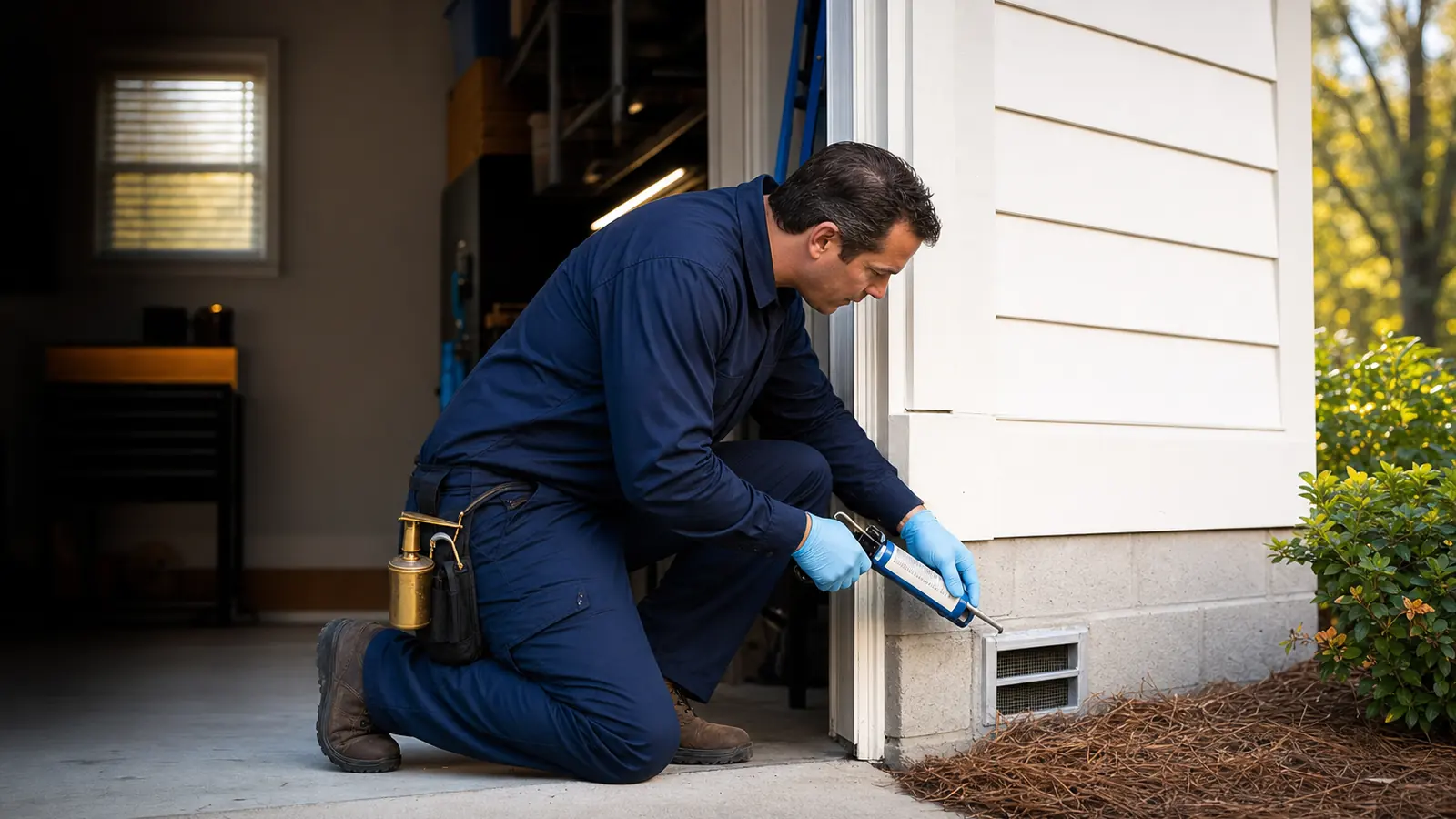
What is rodent exclusion and how is it different from trapping?
Rodent exclusion is the practice of sealing the building so rodents cannot get in, then removing the food, water, and shelter that attract them; trapping reacts to animals already inside, while exclusion changes the home so they stop coming.
Exclusion is the structural side of rodent work. Instead of waiting for a mouse to show up and then catching it, exclusion asks a different question: how is this animal getting in, and what is making the trip worth it? The answer almost always comes down to three things working together, which is entry, food, and shelter. Take away any one of them and the pressure drops. Take away all three and the home stops being a target. Homeowners seeing similar pressure can also review rodent entry-point sealing before scheduling.
The U.S. Environmental Protection Agency lays out the same logic in plain terms. In its guidance on how to identify and prevent rodent infestations, the EPA points to the telltale signs, which are droppings, nesting material, chewing, holes through walls or floors, and a stale smell, and then recommends prevention that centers on sealing holes inside and outside the home, removing nesting sites, and cleaning up food and water sources. That is exclusion in a sentence: seal, remove, clean.
The practical difference shows up months later. A home that was only trapped will usually need trapping again, because the structure never changed. A home that was properly excluded tends to stay quiet, because the mouse that wanders up the foundation this fall finds the gap it used last year closed off and the easy meal gone. Trapping treats the symptom; exclusion treats the reason. Both have a place, and the best results come from doing the trapping to clear what is inside and the exclusion to keep the next wave out. This connects closely with requesting service from Paladin when you are comparing next steps.
What this means for your home
- Practical takeaway: Rodent exclusion is the practice of sealing the building so rodents cannot get in, then removing the food, water, and shelter that attract them; trapping reacts to animals already inside, while exclusion changes the…
- seal remove clean approach
If I seal the entry points, will the rodents already inside be trapped in my walls?
This is why exclusion and trapping work together. The right sequence is to reduce the inside population first with trapping, then seal the structure so no new rodents replace them. A good plan accounts for what is already inside before the final gaps are closed, so you are not sealing animals in.
Want a professional to look at this?
The office will confirm the available appointment date.
Where do mice and rats actually get into an Upstate home?
Most rodents enter low on the structure through gaps you can cover with a thumb: openings around pipes and utility lines, unscreened or damaged crawl-space vents, garage door corners, worn door sweeps, and cracks where the foundation meets the siding.
The size of the openings that matter surprises almost everyone. A house mouse can squeeze through a gap about the width of a dime, roughly a quarter inch, and a young rat needs a hole only about the size of a quarter. That means the entry point is rarely a dramatic hole in the wall. It is far more often a small, ordinary gap that has been there for years, doing no harm until a rodent finds it. For a wider plan, pair this with mouse control so the whole property is covered.
In Upstate South Carolina homes, a handful of spots come up again and again. Here are the entry points worth checking first, in roughly the order we tend to find them:
- Pipe and utility penetrations. Anywhere a water line, gas line, electrical conduit, or cable enters the house, there is usually a gap around it that was never fully sealed.
- Crawl-space and foundation vents. Damaged screens, missing covers, and rusted-out vents are open doors into the area directly under your floors.
- Garage door corners and thresholds. The bottom corners of a garage door rarely seal tight, and the garage often connects to the living space.
- Worn door sweeps and weatherstripping. A daylight gap under an exterior door is a gap a mouse can use.
- Foundation-to-siding cracks. Where the framing meets the foundation, settling and age open thin seams that run for feet.
- Roofline and soffit gaps. Rats and squirrels in particular will use overhanging branches to reach gaps near the roof.
Finding these spots is part inspection and part detective work. We look for the physical gap, but we also read the signs the rodents leave: smudge marks where oily fur rubs an edge, droppings concentrated along a wall, gnaw marks on a vent screen, and insulation pulled into a corner for a nest. Those clues point back to the routes in use, which is exactly where sealing pays off the most.
What this means for your home
- Practical takeaway: Most rodents enter low on the structure through gaps you can cover with a thumb: openings around pipes and utility lines, unscreened or damaged crawl-space vents, garage door corners, worn door sweeps, and cracks where…
How do you make rodent exclusion last instead of just patching it?
Lasting exclusion uses durable materials that rodents cannot chew through, addresses the moisture and clutter that make a home attractive, and is verified weeks later to confirm the activity actually stopped rather than just paused.
Not every patch holds. A foam-only fill or a loose wad of steel wool stuffed in a hole might block a draft, but a determined rat will work right through soft material. Exclusion that lasts uses the right material for each gap, things rodents cannot easily gnaw or pull out, fitted so the seal stays put through weather and time. The goal is a building envelope that simply does not have a usable way in, not a temporary plug that buys a few quiet weeks. This connects closely with Upstate SC service areas when you are comparing next steps.
Materials are only half of it. The other half is the conditions that drew rodents in the first place. Standing moisture under a crawl space, pet food left out overnight, bird seed stored in a paper bag in the garage, and brush piled against the foundation all keep the pressure high no matter how well you seal. This is where the why behind the problem matters. At Paladin Pest Solutions we work from a true comprehensive Integrated Pest Management approach, which means we look for the moisture, the food, and the entry conditions that explain the activity before we recommend a treatment. Sealing a home while ignoring a leaking crawl space just sends the rodents looking for the next gap.
Verification is the step that separates real exclusion from a hopeful guess. After the work is done, the right move is to watch for fresh signs over the following weeks, droppings, sounds, smudge marks, and confirm the activity has actually dropped. Drawing on nearly two decades of industry experience across the Upstate, our team treats that follow-through as part of the job rather than an afterthought. We are working parents ourselves, so we understand that a homeowner does not want to spend their evenings re-checking traps, and a result that holds is the whole point of doing exclusion right the first time. For a wider plan, pair this with rodent entry-point sealing so the whole property is covered.
What this means for your home
- Practical takeaway: Lasting exclusion uses durable materials that rodents cannot chew through, addresses the moisture and clutter that make a home attractive, and is verified weeks later to confirm the activity actually stopped rather than…
- Condition correction lowers repeat pressure by addressing moisture, food sources, harborage, and easy entry points.
- Follow-up visits confirm whether the rodent control activity is dropping and whether any new entry points or pressure signs appeared.
What can a Simpsonville homeowner do before the technician arrives?
You can lower rodent pressure right away by storing food and pet food in sealed containers, fixing easy moisture problems, clearing brush and clutter away from the foundation, and noting where you have seen droppings or heard activity so the inspection starts with real clues.
There is plenty a homeowner can do that makes the professional work go further. None of it requires special tools, and all of it chips away at the food, water, and shelter side of the equation. Think of it as making your home a less appealing place to live while the structural sealing handles the way in. Homeowners seeing similar pressure can also review requesting service from Paladin before scheduling.
Start in the kitchen and pantry, because food is the strongest draw. Move dry goods, pet food, and bird seed into hard containers with tight lids, wipe up crumbs, and stop leaving pet bowls out overnight. Outside, pull mulch, firewood, and brush back from the foundation so rodents lose their cover, and trim branches that touch the roofline. A dripping hose bib or a damp crawl space is worth fixing too, since water is just as much of a magnet as food.
Finally, become a record keeper for a few days. Note where you see droppings, where you hear scratching and at what time, and any spots that smell musty or stale. Take a quick photo if you can. Those notes turn a general inspection into a targeted one, because they point straight at the routes in use. When the inspection starts with real evidence instead of guesswork, the sealing work lands where it actually counts. This connects closely with mouse control when you are comparing next steps.
What this means for your home
- Practical takeaway: You can lower rodent pressure right away by storing food and pet food in sealed containers, fixing easy moisture problems, clearing brush and clutter away from the foundation, and noting where you have seen droppings or…
- seal food sources pantry
When is it time to call a professional for rodent exclusion?
Call for professional exclusion when you keep catching rodents despite repeated trapping, when you find droppings or gnaw marks in more than one area, or when entry points are in hard-to-reach spots like the crawl space, roofline, or behind utility lines.
A single mouse caught once and never seen again may not need much beyond a trap and a careful look around. The signal to bring in a professional is repetition. If you have run traps more than once and the droppings keep coming back, the structure is the problem, and chasing individual animals will not solve it. The same is true when the signs show up in several places at once, since that usually means more than one entry route and a population that has settled in. For a wider plan, pair this with rodent control and exclusion so the whole property is covered.
Access is the other deciding factor. Plenty of entry points sit in spots that are awkward or unsafe to reach, including the underside of a crawl space, the roofline and soffits, and the cramped runs where utility lines pass through the foundation. Sealing those correctly takes the right materials and a willingness to get into the tight, dirty parts of a house. That is the work that makes exclusion hold, and it is hard to do well from a step stool in the kitchen.
If you are at that point, you are welcome to contact Paladin Pest Solutions and walk us through what you have been seeing. We are based in Boiling Springs and serve homes across Upstate South Carolina, with office hours Monday through Friday 8am to 8pm and Saturday 10am to 4pm. We will start by figuring out why the rodents are choosing your home, then build an exclusion plan around that reason rather than handing you another bag of traps. Homeowners seeing similar pressure can also review requesting service from Paladin before scheduling.
What this means for your home
- when to call rodent professional
- Practical takeaway: Call for professional exclusion when you keep catching rodents despite repeated trapping, when you find droppings or gnaw marks in more than one area, or when entry points are in hard-to-reach spots like the crawl…
Rodent control in the Upstate
Seal the entry, set the right trap, then prevent the next migration
Most rodent problems trace back to a gap you can fit a pencil through. We walk the exterior envelope first and identify entry points before we set a single trap.
Inside, traps go on the actual runway. Exterior bait stations live in tamper-resistant housings. We schedule the re-visit before we leave so we catch the second wave.
Keep exploring Paladin
Related Paladin services and guides for Upstate homeowners.
- See the full rodent program at Paladin
- Mouse control and trap placement
- Rat control with exterior bait stations
- Rodent entry-point exclusion
- Kids, pets, and rodent treatment safety
- Rodent entry-point and exclusion guides
- Find a city near you on our Upstate route
- Tell Paladin what you are seeing and ask about current availability
Frequently asked questions
How small a gap can a mouse use to get into my Simpsonville home?
About the width of a dime, or roughly a quarter inch. A young rat needs an opening only about the size of a quarter. Because the gaps that matter are so small, the real entry points are usually ordinary cracks around pipes, vents, and doors rather than obvious holes.
Is rodent exclusion a one-time job or something that has to be repeated?
Done with durable materials and paired with cleaning up food, water, and shelter, exclusion is meant to be a lasting fix rather than a recurring service. The structure is sealed once and verified over the following weeks. Trapping, by contrast, tends to repeat because it never changes the conditions.
Will exclusion work if I still have moisture problems under my crawl space?
Sealing helps, but a damp crawl space keeps the pressure high because moisture draws rodents in the first place. That is why we look for the why behind the activity, including moisture and entry conditions, before recommending a plan, so the exclusion is not undermined by a condition you left in place.
Do you treat rodent problems in areas around Simpsonville too?
Yes. Paladin Pest Solutions is based in Boiling Springs and serves homes across Upstate South Carolina. If you are in Simpsonville or a nearby community and you keep dealing with the same rodent loop, reach out and describe what you have been seeing so we can plan the right exclusion approach.
Ready to shield your family?
One call to Paladin and we’ll meet you where you are, from a quick walk-through to a long-term protection plan.