Upstate South Carolina · Pest control for homes with kids and pets
Mouse Exterminator in Boiling Springs, SC: Why Entry Points Belong in the Plan
A mouse exterminator in Boiling Springs, SC should look at both current activity and entry points. Removing mice alone often leaves the same gaps open. New mice can find those gaps later. A full plan pairs inspection and removal…
- Careful, targeted treatments built around your household
- Local Upstate route, real callbacks from our Spartanburg office
- Honest scoping, never a sales script
Quick Answer
A mouse exterminator in Boiling Springs, SC should look at both current activity and entry points. Removing mice alone often leaves the same gaps open. New mice can find those gaps later. A full plan pairs inspection and removal with verified exclusion work on the structure.
For the next step, compare rodent control and exclusion, read about rodent entry-point sealing, or check where Paladin works across Upstate SC.
Key Takeaways
- Entry point sealing supports lasting mouse control results.
- Droppings and gnaw marks help confirm activity locations.
- Garage gaps and utility lines are common access routes.
- Removal and exclusion are two separate service steps.
- Monitoring after service helps confirm reduced activity.
- Paladin serves Boiling Springs, SC and nearby Upstate areas.
- Exact-address service availability is confirmed by the office.
Why should a mouse exterminator address entry points as well as current activity?
Mice can keep entering through the same gaps that let earlier mice inside. Removing visible activity without closing those gaps often leads to repeat sightings. A plan that pairs removal with entry point work treats both the immediate issue and the access problem at once.
Homeowners in Boiling Springs, SC often call after spotting droppings or hearing noise in walls. That activity is usually a sign of an access problem somewhere on the home. This connects closely with rodent control and exclusion when you are comparing next steps.
A mouse exterminator who focuses only on what is visible today may miss the underlying gap. Another mouse can use that same route later.
A service plan that includes entry point review treats the cause and the symptom as connected parts of one job. For a wider plan, pair this with Upstate SC service areas so the whole property is covered.
What this means for your home
- Boiling Springs service is adjusted to the home style, season, and pressure pattern instead of using the same checklist everywhere.
- Practical takeaway: Mice can keep entering through the same gaps that let earlier mice inside.
Why can mouse activity return after removal?
Mice can return after removal if the openings they used stay open. A home with unsealed gaps near utility lines or garage doors is still easy to enter. Removal reduces the mice inside right now. It does not change how easy the structure is to enter again.
Removal deals with mice already inside a home. It does not change conditions on the outside of the structure. Homeowners seeing similar pressure can also review rodent entry-point sealing before scheduling.
Small gaps around pipes, vents, and siding can remain long after mice are gone. These openings stay usable by new mice.
This is why many service plans separate removal from exclusion. Each step solves a different part of the problem. This connects closely with requesting service from Paladin when you are comparing next steps.
What this means for your home
- Practical takeaway: Mice can return after removal if the openings they used stay open.
- Boiling Springs service is adjusted to the home style, season, and pressure pattern instead of using the same checklist everywhere.
Does sealing entry points replace the need for mouse removal?
No. Sealing entry points and removing mice handle different parts of the problem. Exclusion work reduces future access. It does not remove mice already inside. Both steps are usually part of a complete mouse control plan.
Talk to the Paladin office.
Ask about the next available appointment and what the inspection includes.
Which entry areas should be inspected during a mouse control visit?
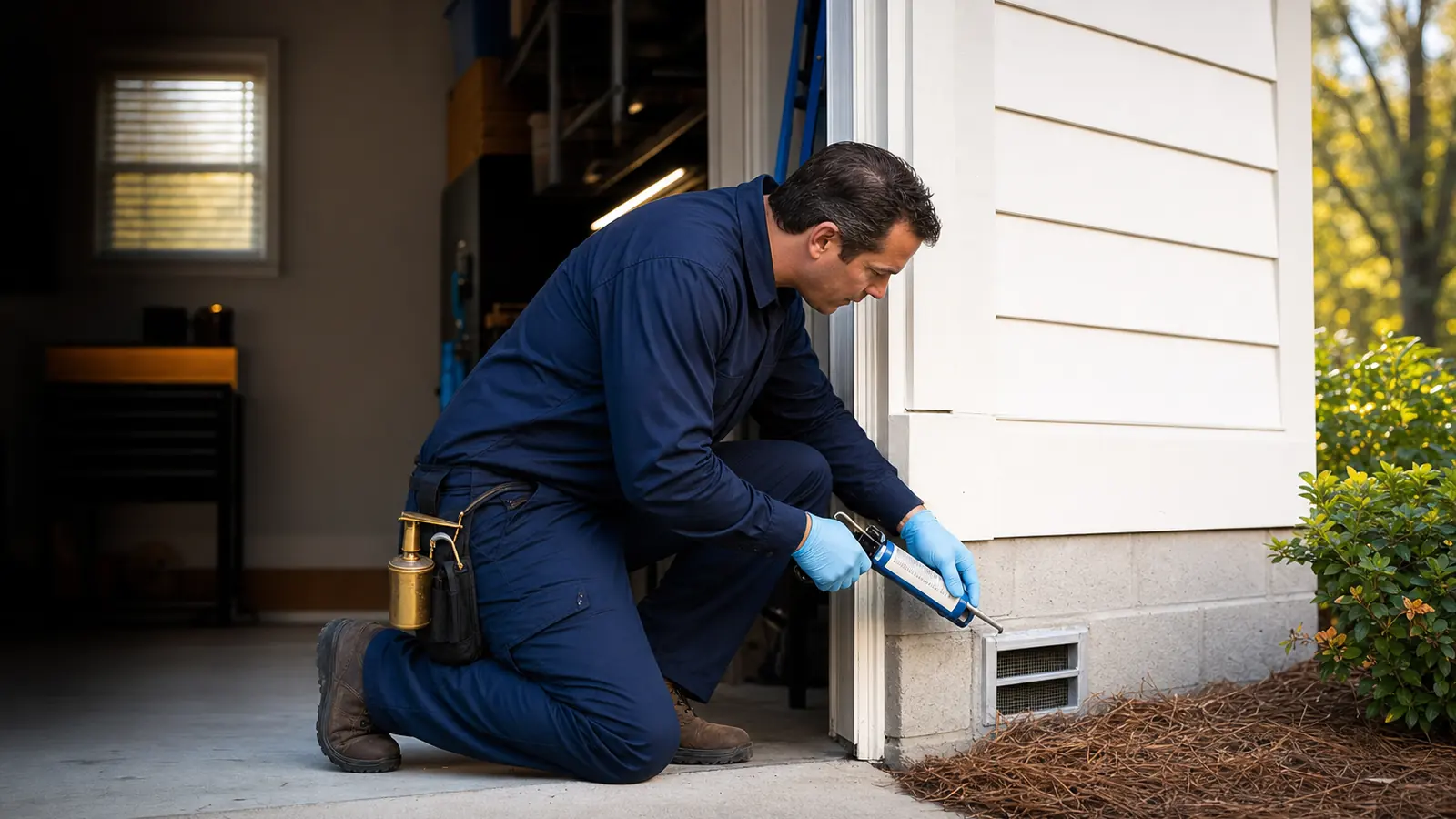
Common areas include garage door bottoms, utility line penetrations, foundation vents, and gaps around exterior pipes. These spots often connect the inside of a home to the outside. A thorough inspection covers several points. It does not stop at one suspected area.
Garage doors often have small gaps at the corners or along the bottom seal. These gaps can widen over time with normal wear. For a wider plan, pair this with mouse control so the whole property is covered.
Utility penetrations, including where cable, water, or gas lines enter a home, are another common area of interest. These openings are sometimes larger than they first appear.
Foundation vents and gaps around exterior trim can also allow access. A full review looks at the whole perimeter, and not one single spot. Homeowners seeing similar pressure can also review rodent control and exclusion before scheduling.
What this means for your home
- Practical takeaway: Common areas include garage door bottoms, utility line penetrations, foundation vents, and gaps around exterior pipes.
How can homeowners document mouse activity before a service visit?
Homeowners can note where droppings, gnaw marks, or noises were seen. Writing down roughly when they occurred helps too. Taking photos of any evidence in place, without moving or cleaning it first, helps a technician understand the pattern. This supports a more focused inspection.
Simple observation notes are useful before any service visit. Recording locations and dates gives a service provider a starting point. This connects closely with Upstate SC service areas when you are comparing next steps.
Photos of droppings, gnaw marks, or damaged packaging can be taken from a distance. Close handling is not needed. These images help confirm where activity has occurred.
This kind of documentation does not replace a professional inspection. It simply gives the visit more direction. For a wider plan, pair this with rodent entry-point sealing so the whole property is covered.
What this means for your home
- Service notes should tell you what was found, what was treated, and what to watch for before the next visit.
- Practical takeaway: Homeowners can note where droppings, gnaw marks, or noises were seen.
Should removal and exclusion be treated as separate steps?
Yes. Removal and exclusion handle different parts of a mouse problem. They are often treated as separate steps for that reason. Removal deals with mice already present. Exclusion addresses the openings that let new mice enter. Together they form a more complete approach than either step alone.
Removal focuses on reducing the mice currently active inside a structure. This step is often the most visible part of a service. Homeowners seeing similar pressure can also review requesting service from Paladin before scheduling.
Exclusion focuses on the building itself. It involves finding and sealing gaps so the structure is harder to re-enter.
Treating these as separate deliverables lets each be checked on its own. A homeowner can see progress on activity and progress on access separately. This connects closely with mouse control when you are comparing next steps.
What this means for your home
- Practical takeaway: Yes.
How is an exclusion repair verified after the work is done?
Verification usually means a follow-up review of the sealed areas. This confirms the repairs still hold up. It may include checking for new gnaw marks or gaps near the treated sections. Monitoring over time also helps show whether activity has dropped since the exclusion work finished.
After entry points are sealed, a follow-up review can confirm the materials are holding up as expected. Weather and normal wear can affect repairs over time. For a wider plan, pair this with rodent control and exclusion so the whole property is covered.
Checking for fresh gnaw marks near sealed areas is one way to see whether mice outside are testing the repair.
Ongoing monitoring, including periodic checks for droppings or noise, helps confirm whether the overall approach is working. Homeowners seeing similar pressure can also review requesting service from Paladin before scheduling.
What this means for your home
- verifying exclusion repair mouse control
- Practical takeaway: Verification usually means a follow-up review of the sealed areas.
Can an integrated approach reduce the chance of repeat mouse activity?
An integrated approach combines inspection, removal, exclusion, and monitoring. It is designed to address several contributing factors at once. This method does not remove every variable. It does consider access, food sources, and structural gaps together. Outcomes vary depending on the property and surrounding conditions.
Integrated Pest Management principles, as described by the EPA, stress looking at several factors rather than one single tactic. This includes inspection, exclusion, and ongoing monitoring together. This connects closely with rodent entry-point sealing when you are comparing next steps.
Applying this approach to mouse control means treating food access, entry points, and current activity as connected issues.
No single step addresses everything on its own. A combined approach aims to lower the overall chance of repeat problems, though results can vary by property. For a wider plan, pair this with rodent control and exclusion so the whole property is covered.
What this means for your home
- Practical takeaway: An integrated approach combines inspection, removal, exclusion, and monitoring.
When should a Boiling Springs homeowner contact a mouse exterminator?
Homeowners often reach out after seeing droppings, hearing noises in walls, or finding chewed packaging in storage areas. Contacting a provider early lets the full scope get assessed sooner. This includes inspection and entry point review. Waiting can let both the activity and the access conditions continue unchecked.
Early signs of mouse activity are worth addressing before they grow more noticeable. Droppings near food storage or pantry areas are a common early sign. Homeowners seeing similar pressure can also review mouse control before scheduling.
Reaching out to a provider allows a broader review of the property. This goes beyond the specific area where signs were first noticed.
Paladin Pest Solutions serves Boiling Springs, SC and other approved locations across Upstate South Carolina. Exact-address availability is confirmed by the office. This connects closely with rodent entry-point sealing when you are comparing next steps.
What this means for your home
- when to call mouse exterminator
- Boiling Springs service is adjusted to the home style, season, and pressure pattern instead of using the same checklist everywhere.
Rodent control in the Upstate
Seal the entry, set the right trap, then prevent the next migration
Most rodent problems trace back to a gap you can fit a pencil through. We walk the exterior envelope first and identify entry points before we set a single trap.
Inside, traps go on the actual runway. Exterior bait stations live in tamper-resistant housings. We schedule the re-visit before we leave so we catch the second wave.
Why this post exists on the Paladin blog
This post was written by someone who actually does this work on Upstate homes, not by a contractor or a marketing team that has never seen the species in person. The Paladin blog exists to answer the questions we hear on real service calls, honestly, in plain English, without selling you a service you do not need. If a post helps you solve the problem on your own, that is a successful post for us. If you read it and decide you would rather have a trained technician on site, that is what the phone is for. Either path is fine.
A first Paladin visit is intended to document the activity, inspect relevant areas, and explain the proposed scope before work begins. Appointment timing and the exact inspection areas depend on the request and property access. Call (864) 816-7658 or use the contact form so the office can confirm the current options.
Paladin is based in Boiling Springs, SC and serves the approved Upstate locations listed on this site. Each recommendation should be tied to conditions documented at the property, including pest evidence, moisture, entry points, food, water, shelter, and access. The office confirms address availability without promising a route frequency or response window.
Keep exploring Paladin
Related Paladin services and guides for Upstate homeowners.
- See the full rodent program at Paladin
- Mouse control and trap placement
- Rat control with exterior bait stations
- Rodent entry-point exclusion
- Kids, pets, and rodent treatment safety
- Rodent entry-point and exclusion guides
- Find a city near you on our Upstate route
- Tell Paladin what you are seeing and ask about current availability
Frequently asked questions
Why does a mouse exterminator in Boiling Springs, SC look at entry points as well as current activity?
Looking at entry points helps explain why mice got inside in the first place. Focusing only on current activity can leave the access issue unresolved. A plan that reviews both areas gives a clearer picture of the property and its ongoing risk factors.
What kinds of entry points are commonly reviewed in a mouse control inspection?
Common areas include garage door seals, utility line penetrations, foundation vents, and gaps around exterior pipes or siding. These spots connect the inside of a home to the outside. A thorough inspection usually reviews the full perimeter rather than one suspected spot.
Can homeowners help by documenting mouse activity themselves?
Yes. Noting where droppings or gnaw marks were seen, along with rough dates, is useful. Photos taken from a distance can also help confirm patterns of activity. This documentation supports a more focused inspection but does not replace a professional review.
Are removal and exclusion always handled as separate steps?
Removal and exclusion address different parts of a mouse problem, so they are often treated as separate steps. Removal reduces current activity. Exclusion addresses the access points that let new mice inside. Combining both gives a more complete approach than either step alone.
How does Paladin Pest Solutions determine service availability in Boiling Springs, SC?
Paladin Pest Solutions is based in Boiling Springs, SC and serves approved locations across Upstate South Carolina. Exact-address availability is confirmed directly by the office. Homeowners can contact Paladin to check whether their specific address falls within the current service area.
Ready to shield your family?
One call to Paladin and we’ll meet you where you are, from a quick walk-through to a long-term protection plan.