Upstate South Carolina · Careful, targeted pest control
Mosquito Yard Treatment in Greer, SC: Standing Water
Mosquitoes keep coming back to Greer yards because they breed in standing water, and most of that water is hiding in places homeowners walk past every day. A clogged gutter, a saucer under a potted plant, a sagging tarp, a…
- Product placement chosen around kids, pets, and pollinators
- A real Spartanburg crew, not a national call center
- Plain-English findings before any treatment starts
Quick Answer
Mosquitoes keep coming back to Greer yards because they breed in standing water, and most of that water is hiding in places homeowners walk past every day. A clogged gutter, a saucer under a potted plant, a sagging tarp, a forgotten bucket, or a low spot in the lawn can each raise a fresh batch of biting adults in about a week. The most effective mosquito yard treatment starts with finding and draining that water, then treating the spots you cannot empty, because some mosquitoes only travel a few hundred feet from where they hatched. Clear the water first and a professional treatment has far less to fight.
For the next step, compare mosquito control services, read about mosquito prevention for families, or check where Paladin works across Upstate SC.
Key Takeaways
- Mosquitoes breed in standing water, so the fastest way to cut a Greer yard's mosquito pressure is to find and remove the water they are using.
- Some mosquitoes fly only a few hundred feet from where they hatched, which means most of the biting adults in your yard were almost certainly raised in your yard or a neighbor's.
- Clogged gutters are one of the most overlooked breeding sites because the water sits out of sight and refills with every rain.
- Containers, low spots, and anything that holds water for more than a few days should be drained, dumped, or treated on a weekly rhythm.
- A yard treatment works best as the second step, after the standing water is gone, not as a substitute for getting rid of it.
Why does standing water keep mosquitoes around a Greer yard?
Mosquitoes lay their eggs in or near standing water, and the eggs hatch into larvae that live in that same water until they emerge as biting adults. As long as water sits undisturbed for several days, a Greer yard keeps producing new mosquitoes on its own, no matter how many adults you swat.
Mosquitoes are tied to water for the first and most vulnerable part of their lives. A female lays her eggs on the surface of still water or on a damp edge that will soon flood, and within days those eggs become wriggling larvae that feed and grow right there in the puddle, bucket, or clogged gutter. They cannot complete that stage in fast-moving water or on dry ground, which is the single most useful fact a Greer homeowner can hold onto: no standing water, no new mosquitoes. The South Carolina Department of Public Health makes the same point in its guidance on eliminating mosquito breeding areas, noting that mosquitoes breed in standing water and that draining or treating that water is the foundation of control.
What makes this frustrating in a real yard is the speed of the cycle. In the warm, humid stretch of an Upstate summer, water that collects after a Thursday thunderstorm can be raising adult mosquitoes by the following week. That is why a yard can feel fine one weekend and unbearable the next, and why knocking down the adults you can see does so little on its own. The yard is a hatchery, and the hatchery does not care how many adults you killed yesterday.
There is also a distance factor that surprises a lot of people. The same public-health guidance points out that some mosquito species fly only a few hundred feet from where they breed. In practical terms, the cloud of mosquitoes ruining your Greer patio was almost certainly raised in your own yard or a neighbor's a stone's throw away, not blown in from some distant swamp. That is good news, because it means the problem is usually close enough to find and fix. Understanding that local source is exactly the kind of question our approach starts with, the same way we describe in our work on professional mosquito control service for Upstate homes.
What this means for your home
- Greer service is adjusted to the home style, season, and pressure pattern instead of using the same checklist everywhere.
- Practical takeaway: Mosquitoes lay their eggs in or near standing water, and the eggs hatch into larvae that live in that same water until they emerge as biting adults.

Where does standing water hide in a typical Greer yard?
The water that breeds mosquitoes is rarely an obvious pond. It hides in clogged gutters, plant saucers, buckets, tarps, toys, clogged drains, tire ruts, and low spots in the lawn that hold water for days after a rain. Most of these spots are small, ignored, and refill every time it storms.
When homeowners picture mosquito water they tend to imagine a stagnant pond at the back of the property. In reality, the breeding sites that matter most are small and close to the house. A bottle cap of water is enough for some mosquitoes, so the search is really about volume and frequency: how many little reservoirs does your yard hold, and how often do they refill? Once you start looking at a Greer yard through that lens, the hiding spots show up everywhere. Homeowners seeing similar pressure can also review mosquito prevention for families before scheduling.
Clogged gutters deserve a special mention because they are the breeding site people forget most. Water pools in the low sections behind leaf debris, sits well out of sight from the ground, and tops itself off with every rain. The South Carolina Department of Public Health specifically flags clogged gutters as an overlooked breeding source, and in our experience around Upstate homes that holds up: a gutter you cannot see into is doing quiet damage all season. Pair gutters with the broader pest pressure that comes with Upstate moisture and you can see why we treat water as the root issue across our Greer pest control work, beyond a mosquito footnote.
Below the roofline, the list keeps going: saucers under potted plants, the folds of a sagging tarp or grill cover, kids' toys and sandbox lids left upturned, wheelbarrows, watering cans, pet bowls, recycling bins, corrugated drain pipes that hold a slug of water at the bend, birdbaths nobody refreshes, and clogged French drains. Out in the lawn itself, tire ruts and natural low spots can hold water for days after a storm. None of these look like a mosquito problem on their own. Added together across a property, they are the whole problem. This connects closely with requesting service from Paladin when you are comparing next steps.
What this means for your home
- Practical takeaway: The water that breeds mosquitoes is rarely an obvious pond.
How little water does it take for mosquitoes to breed in my yard?
Very little. Some mosquitoes can develop in water as shallow as a bottle cap, so the issue is the number of small reservoirs around your property, not the size of any single one. That is why tipping out saucers, toys, and buckets matters as much as dealing with a pond.
Want a professional to look at this?
The office will confirm the available appointment date.
What are the top water sources to drain before a mosquito yard treatment?
Walk the property once and deal with the water in a fixed order, starting with the spots that refill on their own. The list below is the practical routine we use to find and remove standing water before any treatment goes down, because draining the source does more than spraying the air ever will.
Here is a homeowner-friendly walk that mirrors how we think about a Greer property, scaled to something you can do in twenty minutes with a flashlight and an old towel: For a wider plan, pair this with mosquito yard treatment so the whole property is covered.
- Clear the gutters and downspouts. Pull the leaf debris, flush the runs, and check that downspout extensions actually drain away from the foundation instead of pooling at the base.
- Dump every container. Tip out buckets, plant saucers, watering cans, pet bowls, toys, and recycling bins, then store them upside down so they cannot refill.
- Fix the tarps and covers. Tighten or remove sagging tarps, grill covers, and trampoline pads where water collects in the folds.
- Refresh standing decoratives. Empty and scrub birdbaths and fountains at least weekly, or keep the water moving so larvae cannot mature.
- Trace the drainage. Follow where water goes after a storm; clear clogged French drains and corrugated pipe bends that trap a slug of water.
- Mark the low spots. Note any lawn ruts or depressions that hold water for more than a few days and plan to fill or regrade them.
- Treat what you truly cannot drain. For water features or low areas that must hold water, that is where a targeted treatment belongs, not as a substitute for the steps above.
This routine takes most homeowners twenty minutes and pays for itself in a quieter yard. The order matters: gutters and self-refilling containers come first because they regenerate the problem fastest, while the low spots and water you genuinely cannot remove are the small remainder a treatment is meant to handle. Doing the walk on a weekly rhythm through the warm season keeps the yard from quietly rebuilding its mosquito hatchery between visits. If the standing water turns out to be a drainage or moisture issue bigger than a bucket, that is the moment to contact Paladin Pest Solutions and have someone look at the why behind it.
What this means for your home
- Practical takeaway: Walk the property once and deal with the water in a fixed order, starting with the spots that refill on their own.
- Greer service is adjusted to the home style, season, and pressure pattern instead of using the same checklist everywhere.

How does a professional mosquito yard treatment actually work?
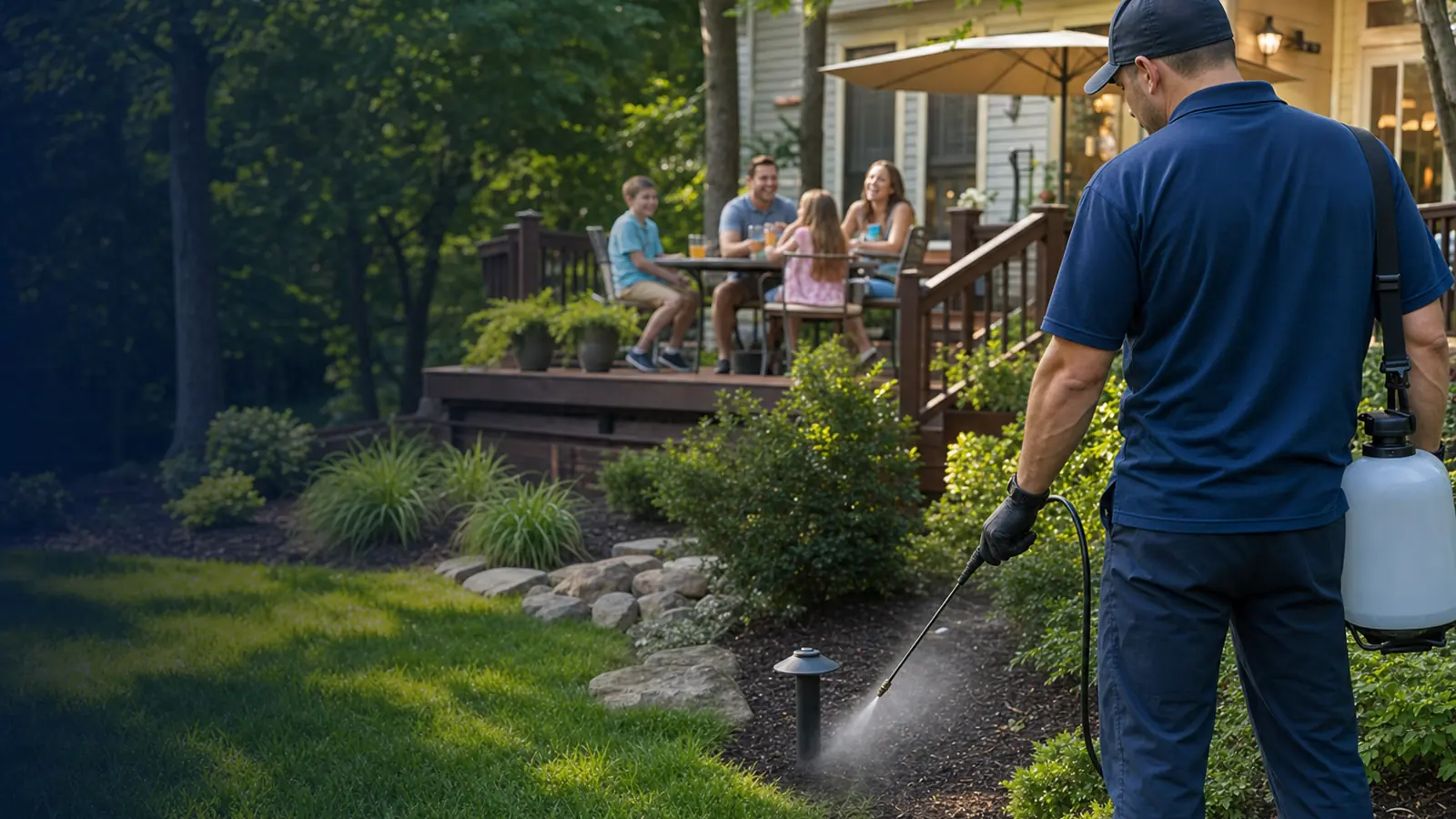
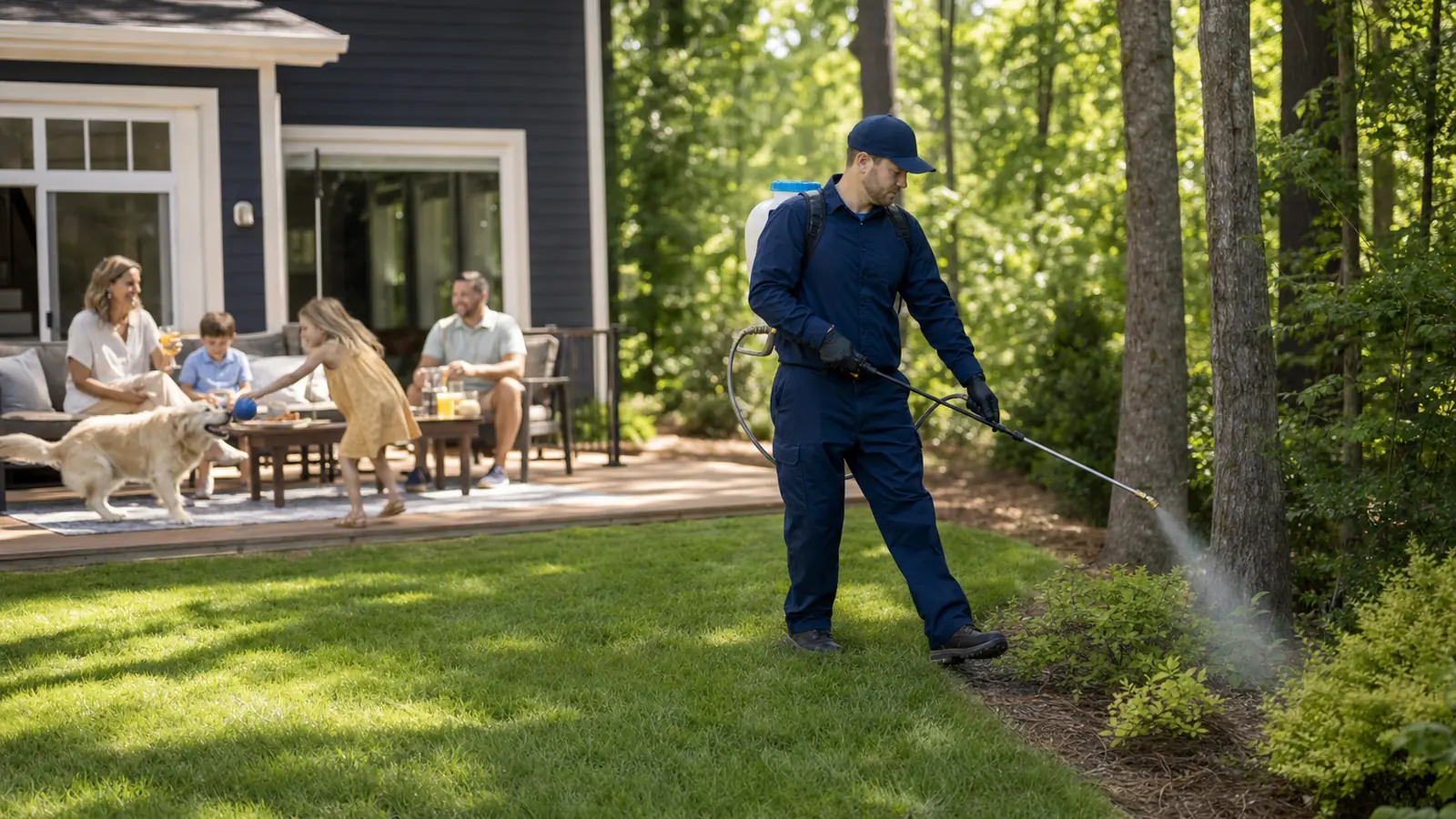
A good treatment is two jobs in one: knocking down the adults resting in shaded vegetation, and interrupting the next generation in the water sources that cannot be drained. It targets the places mosquitoes hide and breed rather than fogging the open air, and it works far better once the easy standing water is already gone.
The phrase yard treatment makes people picture someone walking the lawn with a sprayer, misting everything in sight. The reality is more targeted and more useful. Adult mosquitoes do not sit out in the sunny middle of the lawn; they rest in cool, shaded, humid harborage, the underside of leaves, dense shrubs, ivy, the shady side of a fence, and the lower branches of trees. A treatment focuses on that resting habitat so it actually reaches where the adults spend their day. This connects closely with Upstate SC service areas when you are comparing next steps.
The second half of the job is the part that breaks the cycle: addressing the water that cannot be emptied. A drainage low spot, a rain garden, a decorative pond, or a catch basin can be treated so that larvae do not mature into the next wave of biters. This is why the order we keep returning to matters so much. If the gutters are still clogged and the buckets are still full, a treatment is fighting an endless supply of fresh mosquitoes; clear those first and the treatment has a small, manageable number of true breeding sites left to handle. Our philosophy is to identify the why behind the pressure, including the moisture, the entry points, and the conditions feeding it, before recommending any treatment at all.
It also helps to set honest expectations. A yard treatment reduces mosquito pressure and reclaims a patio or play area; it does not seal your yard against every mosquito that drifts over a fence line, especially given how short their flights are between nearby properties. The best results we see come from pairing professional treatment with the homeowner keeping up the weekly water walk, so the two efforts reinforce each other across the season rather than the spray doing all the work alone. For a wider plan, pair this with mosquito prevention for families so the whole property is covered.
What this means for your home
- Practical takeaway: A good treatment is two jobs in one: knocking down the adults resting in shaded vegetation, and interrupting the next generation in the water sources that cannot be drained.
- Targeted treatment focuses on cracks, voids, exterior edges, nesting areas, and travel paths instead of blanket-spraying open surfaces.
How quickly do mosquitoes come back after you remove the water?
Removing standing water cuts off new mosquitoes almost immediately, but the adults already flying can live for a couple of weeks, so the yard feels better within days and noticeably calmer within a week or two. The catch is that a single rainstorm can refill the same spots, which is why source reduction has to be a habit, not a one-time chore.
When you drain the breeding sites, you stop the supply line. No new larvae mature, so the only mosquitoes left are the adults already on the wing, and those have a limited lifespan. Most homeowners notice a real difference within a few days and a clear improvement within a week or two, especially when the drained water is paired with a treatment of the resting areas. The improvement is real because you removed the cause, beyond the symptom. Homeowners seeing similar pressure can also review requesting service from Paladin before scheduling.
The reason mosquitoes seem to bounce back is almost always new water. An Upstate summer delivers regular afternoon storms, and each one can refill the exact gutter, saucer, or low spot you just emptied. If a week goes by without anyone tipping out the containers or checking the gutters, the hatchery is quietly back in business and a new batch is on the way. This is the single biggest reason a yard that felt great in early June feels miserable again by July, and it has nothing to do with the treatment failing.
The fix is rhythm. Tie the water walk to something you already do weekly, mowing the lawn or rolling the bins to the curb, so the property never gets more than seven days to rebuild its mosquito supply. Homeowners who keep that habit, and lean on a professional for the harborage and the water they cannot drain, get the steadiest results. As working parents ourselves, the Paladin team built its routines around respecting a customer's time, so we are glad to show you the few spots on your specific property that matter most rather than handing you a generic chore list. This connects closely with mosquito yard treatment when you are comparing next steps.
What this means for your home
- Practical takeaway: Removing standing water cuts off new mosquitoes almost immediately, but the adults already flying can live for a couple of weeks, so the yard feels better within days and noticeably calmer within a week or two.
When should a Greer homeowner call a professional about mosquitoes?
Call when the standing water is more than you can drain on your own, when a drainage or moisture problem keeps recreating it, or when you have cleared the obvious water and the yard is still unusable. A professional handles the resting-area treatment and the water you cannot remove, and helps trace the source you may have missed.
There is no harm in calling early, but the clearest signals are practical. If your yard's water comes from a grading or drainage issue, a chronically wet low spot, a French drain that backs up, a crawl space or downspout problem feeding a soggy area, that is bigger than a weekly dump-the-buckets routine and worth a professional look. The same is true if you have honestly done the water walk and the patio is still unusable at dusk; that usually means harborage treatment and a couple of hidden sources are doing the damage. For a wider plan, pair this with mosquito control services so the whole property is covered.
A professional visit looks at the property the way a quick homeowner walk cannot. It finds the gutter you could not see into, the catch basin holding water, and the shaded harborage where the adults are resting, then treats what should be treated and tells you plainly what to drain. The Paladin approach starts with understanding the why behind the pressure, including the moisture, the entry points, and the conditions inviting mosquitoes in, before recommending any treatment, because solving the source beats chasing the symptom every time.
We are happy to help. Call (864) 816-7658 or email info@paladinpestsolutions.com, and you can also reach us through our contact page. Our office hours are Monday through Friday from 8am to 8pm and Saturday from 10am to 4pm. We are based in Boiling Springs and serve homeowners across Greer and the wider Upstate, and with nearly two decades of industry experience we built our work around true comprehensive Integrated Pest Management rather than one-size-fits-all spraying.
What this means for your home
- Greer service is adjusted to the home style, season, and pressure pattern instead of using the same checklist everywhere.
- Practical takeaway: Call when the standing water is more than you can drain on your own, when a drainage or moisture problem keeps recreating it, or when you have cleared the obvious water and the yard is still unusable.
- Targeted treatment focuses on cracks, voids, exterior edges, nesting areas, and travel paths instead of blanket-spraying open surfaces.
Mosquito yard protection
Source reduction first, treatment second, that's how Upstate yards stay usable
Every Paladin mosquito visit walks the yard for the breeding source: gutters, planters, kid pools, dog bowls, low spots, downspout splash blocks. The biggest mosquito reduction usually happens before we ever apply product.
Treatment targets the resting harborage along shaded shrubs and the foundation. Pet-aware, kid-aware, and re-applied on the cadence that actually matches Upstate humidity.
Keep exploring Paladin
Related Paladin services and guides for Upstate homeowners.
- See the full mosquito program at Paladin
- Yard mosquito treatment programs
- Targeted mosquito spraying
- Yard pest prevention programs
- Protect your family from mosquitoes
- Upstate mosquito yard protection
- Find a city near you on our Upstate route
- Tell Paladin what you are seeing and ask about current availability
Frequently asked questions
Will draining standing water alone fix my mosquito problem in Greer?
Draining standing water is the most powerful single step because it stops new mosquitoes from being produced, and many yards improve dramatically from that alone. Pairing it with a treatment of shaded resting areas and any water you cannot remove gives the steadiest results, since adults already flying take a couple of weeks to die off.
How often should I check my yard for standing water?
Weekly through the warm season. Upstate summer storms can refill a gutter, saucer, or low spot within days, so a quick walk every seven days keeps your yard from quietly rebuilding its mosquito supply between rains.
Why are clogged gutters such a common mosquito source?
Water pools in the low sections of a clogged gutter, sits out of sight from the ground, and tops itself off with every rain. South Carolina public-health guidance specifically calls out clogged gutters as an overlooked breeding site, and they are easy to forget precisely because you cannot see the water from below.
Which Upstate areas does Paladin serve for mosquito help?
Paladin is based in Boiling Springs and serves Greer, Greenville, Spartanburg, Taylors, Simpsonville, Fountain Inn, Piedmont, Travelers Rest, Landrum, Lyman, Duncan, Roebuck, Gaffney, Cowpens, and Chesnee across Upstate South Carolina.
Ready to shield your family?
One call to Paladin and we’ll meet you where you are, from a quick walk-through to a long-term protection plan.