Upstate South Carolina · Pest control for homes with kids and pets
Fall Rodent and Wildlife Exclusion for Upstate SC Homes
Before fall shelter pressure builds, Upstate homeowners can safely walk the exterior and note conditions at the roofline, utility penetrations, doors, crawl space vents, food storage areas, and attic activity. This creates a…
- Careful, targeted treatments built around your household
- Local Upstate route, real callbacks from our Spartanburg office
- Honest scoping, never a sales script
Quick Answer
Before fall shelter pressure builds, Upstate homeowners can safely walk the exterior and note conditions at the roofline, utility penetrations, doors, crawl space vents, food storage areas, and attic activity. This creates a dated record that separates what a homeowner can observe from what requires professional identification, treatment, or repair.
For the next step, compare rodent control and exclusion, read about rodent entry-point sealing, or check where Paladin works across Upstate SC.
Key Takeaways
- A fall inspection is a documentation exercise, not a diagnosis, and should stay focused on visible, ground-level observation.
- Cooler weather increases the value of stable food, water, and shelter, which is why entry points get more attention in fall than midsummer.
- Roofline, soffit, and eave gaps can usually be scanned from the ground without climbing or handling materials.
- Utility penetrations, door thresholds, and vent screens are common, easy-to-miss gap locations worth photographing with dates.
- Prevention tasks like food storage belong to homeowners, while identification, treatment, and structural exclusion repairs belong to a rodent control and exclusion service.
- Paladin Pest Solutions offers multi-point inspections, rodent control, entry-point sealing, and wildlife removal across approved Upstate South Carolina locations, with exact-address availability confirmed by the office.
What should Upstate homeowners inspect before fall shelter pressure increases?
A practical fall walk-through covers the roofline, utility penetrations, doors, crawl space vents, food storage, and attic evidence, giving homeowners a dated record before cooler weather increases interest in indoor shelter.
Public guidance on integrated pest management emphasizes inspection as the first step in any prevention plan, and that principle applies directly to a fall walk-through of a residential property. Rather than reacting after a problem appears, homeowners can organize a simple route around the exterior and note conditions in a consistent order each season. This connects closely with rodent control and exclusion when you are comparing next steps.
Working the property in sections, roofline first, then utility penetrations, then doors, then crawl space vents, then food storage, then attic evidence, keeps the process manageable and repeatable. A consistent route also makes it easier to compare notes from one season to the next, since the same locations are checked each time.
This kind of walk-through is an observation exercise, not a diagnosis. Photographing a gap, noting its location, and recording the date is different from identifying a species or deciding on a treatment plan, both of which fall outside what a homeowner can determine from a visual check alone. For a wider plan, pair this with Upstate SC service areas so the whole property is covered.
What this means for your home
- Practical takeaway: A practical fall walk-through covers the roofline, utility penetrations, doors, crawl space vents, food storage, and attic evidence, giving homeowners a dated record before cooler weather increases interest in indoor…
- Service notes should tell you what was found, what was treated, and what to watch for before the next visit.
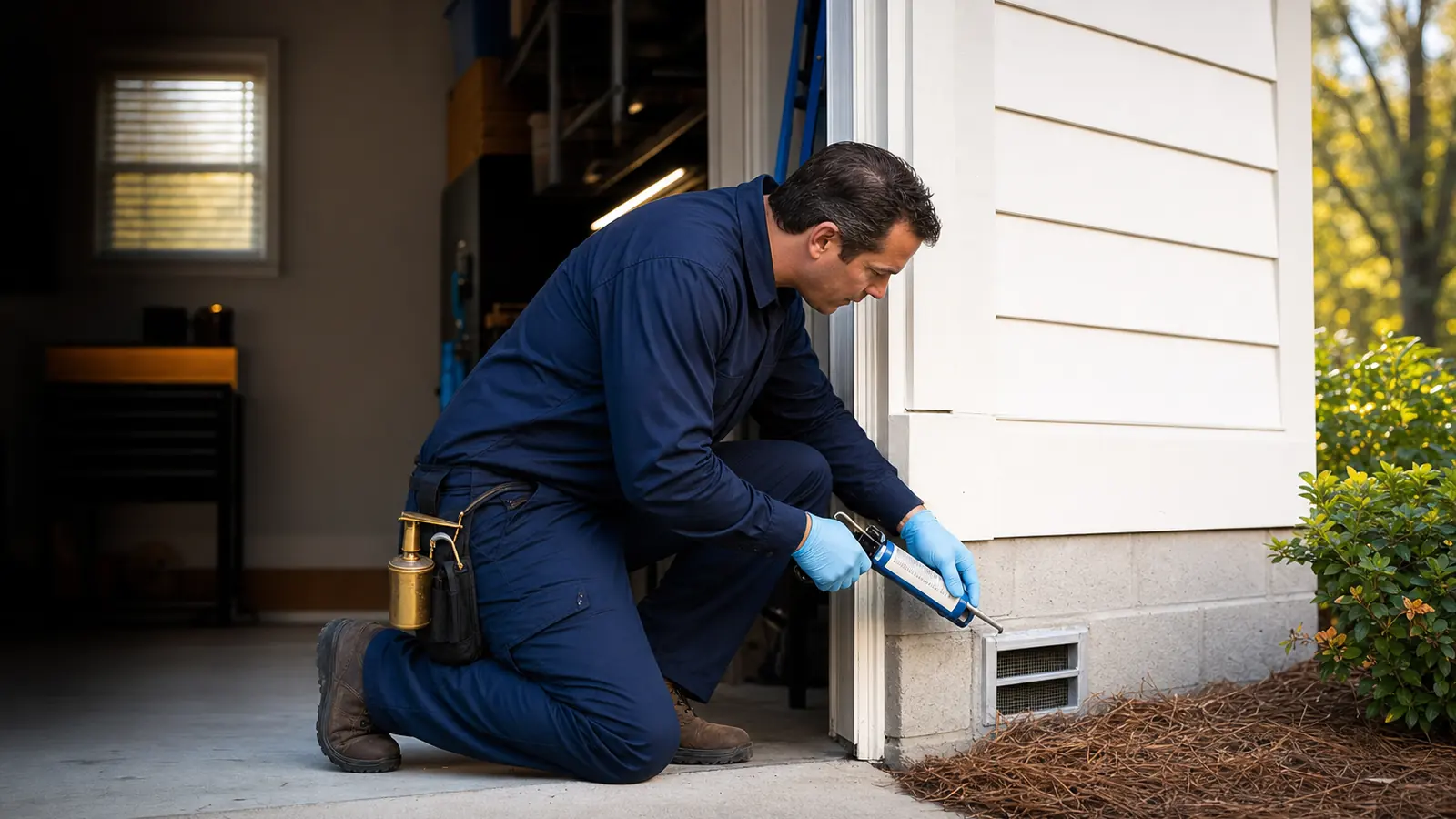
Why does cooler weather change rodent and wildlife behavior around homes?
As outdoor temperatures drop, stable sources of food, water, and shelter become more attractive, and homes often provide all three, which is why fall inspections focus more heavily on entry points than midsummer checks do.
General wildlife control guidance from university extension resources notes that structures offer consistent shelter compared to outdoor environments once seasonal conditions shift. This is not unique to any one species and applies broadly across the types of wildlife that extension publications address for homeowners. Homeowners seeing similar pressure can also review rodent entry-point sealing before scheduling.
Because the underlying motivation is shelter and food access rather than any single behavior pattern, the practical response is the same regardless of which animal might be involved: reduce easy access points and remove unsecured food sources. This keeps the homeowner's role focused on conditions rather than on identifying a specific animal.
It is worth noting that general seasonal patterns described in public resources are not the same as a claim about a specific property. A homeowner noticing new activity in October should treat that as a reason to inspect and document, not as confirmation of what is causing it. This connects closely with requesting service from Paladin when you are comparing next steps.
What this means for your home
- Practical takeaway: As outdoor temperatures drop, stable sources of food, water, and shelter become more attractive, and homes often provide all three, which is why fall inspections focus more heavily on entry points than midsummer checks…
Can homeowners seal entry points themselves during a fall inspection?
Minor items like replacing worn door weatherstripping are usually within a homeowner's ability, but larger gaps near rooflines, utility penetrations, or foundation vents are better handled by a rodent control and exclusion service that can evaluate the surrounding materials before repairing them.
Talk to the Paladin office.
Ask about the next available appointment and what the inspection includes.
What roofline and eave conditions are worth observing?
Homeowners can scan the roofline, fascia boards, soffit returns, and roof-to-wall intersections from the ground using binoculars if needed, without climbing on the roof or attempting any repair.
Standing at a distance and walking the perimeter of the home while looking up at the roofline is a safe way to notice gaps, gaps in soffit panels, or separation at fascia boards. A slow pass on all four sides, rather than a quick glance from one spot, tends to reveal more than a single vantage point. For a wider plan, pair this with mouse control so the whole property is covered.
Photographs taken from the ground, with a note of the approximate location such as northeast corner or above the garage, create a useful record without requiring anyone to get on a ladder or roof. Comparing photos from one fall to the next can show whether a gap has changed in size or appearance.
Any repair work at the roofline, including sealing gaps near soffit vents or fascia returns, involves working at height and around roofing materials. That kind of work is better suited to a professional service than a homeowner project, both for safety and because proper sealing at height requires the right materials and access equipment. Homeowners seeing similar pressure can also review rodent control and exclusion before scheduling.
What this means for your home
- Practical takeaway: Homeowners can scan the roofline, fascia boards, soffit returns, and roof-to-wall intersections from the ground using binoculars if needed, without climbing on the roof or attempting any repair.
- soffit and fascia check
What utility penetrations and gaps deserve a closer look?
Locations where pipes, wires, dryer vents, and HVAC lines pass through exterior walls are common gap sites, and homeowners can note their condition during a perimeter walk without touching the utility lines themselves.
A slow walk around the foundation and exterior walls, following each visible pipe, cable, or vent line to where it enters the structure, is a straightforward way to spot small gaps around utility penetrations. These points are easy to overlook during routine yard maintenance because they blend into the wall surface. This connects closely with Upstate SC service areas when you are comparing next steps.
Noting whether the gap around a penetration looks tight, loose, or has visible daylight coming through is useful information to record with a photo and a location note. There is no need to measure the gap precisely or attempt to fill it during this step.
Because these penetrations often involve gas lines, electrical service, or HVAC refrigerant lines, sealing work around them should be left to a professional exclusion service rather than attempted with household materials. A rodent control and exclusion provider can evaluate the gap and the utility line together before deciding on a repair approach. For a wider plan, pair this with rodent entry-point sealing so the whole property is covered.
What this means for your home
- Practical takeaway: Locations where pipes, wires, dryer vents, and HVAC lines pass through exterior walls are common gap sites, and homeowners can note their condition during a perimeter walk without touching the utility lines themselves.
What do doors, garage thresholds, and vents reveal about entry risk?
Gaps under exterior doors, wear along garage door seals, and damaged screening on foundation or gable vents are usually visible from ground level and often show light or airflow when they need attention.
Checking exterior doors by closing them and looking for daylight along the bottom edge or sides is a simple way to spot worn weatherstripping. The same check works for the garage door, where the rubber seal along the bottom can wear down or lift away from the concrete over time. Homeowners seeing similar pressure can also review requesting service from Paladin before scheduling.
Foundation vents and gable vents typically have a screen or louvered cover, and homeowners can look for tears, rust, or gaps where the screen no longer sits flush against the frame. A flashlight held at an angle in daylight can make small gaps easier to see against the shadow behind the vent.
Recording which doors and vents show wear, along with a date, helps prioritize which areas to mention if a professional inspection follows. Minor weatherstripping replacement is often a homeowner-level task, but vent screen replacement and door threshold repair may be better handled alongside a broader exclusion plan. This connects closely with mouse control when you are comparing next steps.
What this means for your home
- garage door seal wear
- Condition correction lowers repeat pressure by addressing moisture, food sources, harborage, and easy entry points.
- Practical takeaway: Gaps under exterior doors, wear along garage door seals, and damaged screening on foundation or gable vents are usually visible from ground level and often show light or airflow when they need attention.
What can homeowners safely observe in crawl spaces and foundations?
Without entering a crawl space or any confined area, homeowners can view foundation vents and visible foundation lines from outside, noting screen condition, debris buildup, and any obvious gaps near vent openings.
Crawl spaces can involve limited clearance, uneven footing, and unknown conditions, so viewing the vents and foundation from outside the structure is the safer approach for a homeowner. A flashlight aimed through an open or damaged vent screen from outside can sometimes reveal whether debris or vegetation is blocking airflow, without anyone needing to go underneath the home. For a wider plan, pair this with rodent control and exclusion so the whole property is covered.
Overgrown shrubs, leaf piles, or stored materials pushed up against foundation vents are worth noting, since they can obscure a vent opening from being checked visually in the future. Clearing vegetation away from the foundation line is generally a task a homeowner can manage safely with normal yard tools.
If a vent screen appears torn, missing, or bent away from its frame, that is useful information to document with a photo rather than something to repair by hand. A rodent control and exclusion service can assess whether the vent needs a new screen, a repair, or a different type of cover as part of a broader exclusion plan. Homeowners seeing similar pressure can also review requesting service from Paladin before scheduling.
What this means for your home
- Practical takeaway: Without entering a crawl space or any confined area, homeowners can view foundation vents and visible foundation lines from outside, noting screen condition, debris buildup, and any obvious gaps near vent openings.
How do food storage habits and attic sounds factor into a fall inspection?
Reviewing where pet food, bird seed, and stored grains are kept, along with any unusual sounds noticed in the attic after dusk, helps document contributing conditions without requiring anyone to enter the attic space.
Pet food bags, bird seed containers, and pantry staples left in open bags or thin plastic packaging are easier to access than food stored in sealed containers. Walking through the garage, porch, and pantry to note how food is currently stored is a task any homeowner can complete in a few minutes. This connects closely with rodent entry-point sealing when you are comparing next steps.
Sounds heard in the attic or wall voids, particularly in the evening or early morning hours, are worth noting with a rough time and duration rather than an assumption about what is causing them. A simple log entry such as scratching sound, upstairs hallway ceiling, around 9 p.m. is more useful later than a general impression.
Attic access often involves limited lighting, insulation, and structural framing that are not straightforward to navigate safely, so entering the attic to investigate a sound is not a step homeowners need to take on their own. Recording the pattern of sounds over several nights gives a professional inspector useful context without requiring any hands-on investigation. For a wider plan, pair this with rodent control and exclusion so the whole property is covered.
What this means for your home
- Practical takeaway: Reviewing where pet food, bird seed, and stored grains are kept, along with any unusual sounds noticed in the attic after dusk, helps document contributing conditions without requiring anyone to enter the attic space.
- Documentation should summarize findings, treated areas, product locations where applicable, and the recommended follow-up plan.
How should homeowners separate prevention, identification, treatment, and repair responsibilities?
Prevention tasks like sealing minor gaps and securing food storage generally belong to homeowners, while species identification, treatment decisions, and structural exclusion repairs at rooflines or utility penetrations are best handled by a pest management professional.
Public integrated pest management guidance describes a sequence that starts with inspection, moves to identification, and only then addresses treatment and prevention as informed decisions rather than guesses. Applying that sequence at home means a homeowner's fall walk-through feeds into a professional's identification and treatment planning, rather than replacing it. Homeowners seeing similar pressure can also review mouse control before scheduling.
Homeowner-level prevention tasks tend to be low-risk and reversible, such as storing food in sealed containers, trimming vegetation away from the foundation, and replacing worn door weatherstripping. These tasks reduce easy opportunities without requiring specialized equipment or judgment calls about a specific species.
Identification, treatment, and structural exclusion repairs sit on the other side of that line because they require assessing evidence, understanding building materials, and sometimes working at height or in confined spaces. A rodent control and exclusion service such as Paladin Pest Solutions offers multi-point inspections, rodent control, entry-point sealing, and wildlife removal, which covers this second category of work for homeowners across its approved Upstate South Carolina service area. This connects closely with rodent entry-point sealing when you are comparing next steps.
What this means for your home
- Practical takeaway: Prevention tasks like sealing minor gaps and securing food storage generally belong to homeowners, while species identification, treatment decisions, and structural exclusion repairs at rooflines or utility penetrations…
- exclusion repair responsibility
When should Upstate homeowners contact a pest management professional?
Once a documented fall walk-through shows recurring gaps, screen damage, unexplained attic sounds, or other evidence that needs closer evaluation, contacting a rodent control and exclusion service is the reasonable next step.
A completed walk-through with dated photos and notes gives a professional a useful starting point rather than a blank slate. Sharing that record when scheduling an inspection can help focus the visit on the areas a homeowner already flagged as worth a closer look. For a wider plan, pair this with Upstate SC service areas so the whole property is covered.
Paladin Pest Solutions is based in Boiling Springs, South Carolina, and serves approved locations across the Upstate, with exact-address availability confirmed by the office. Its listed capabilities include integrated pest management, multi-point inspections, rodent control, entry-point sealing and exclusion, and wildlife removal, which together cover the identification, treatment, and repair steps that fall outside homeowner-level tasks.
Homeowners who complete the roofline, utility, door, crawl space, food storage, and attic evidence review outlined above will have a clear, dated record to bring into that conversation. From there, a professional inspection can build on those observations rather than starting from scratch. Homeowners seeing similar pressure can also review mouse control before scheduling.
What this means for your home
- Practical takeaway: Once a documented fall walk-through shows recurring gaps, screen damage, unexplained attic sounds, or other evidence that needs closer evaluation, contacting a rodent control and exclusion service is the reasonable next…
- Follow-up visits confirm whether the rodent control activity is dropping and whether any new entry points or pressure signs appeared.
Rodent control in the Upstate
Seal the entry, set the right trap, then prevent the next migration
Most rodent problems trace back to a gap you can fit a pencil through. We walk the exterior envelope first and identify entry points before we set a single trap.
Inside, traps go on the actual runway. Exterior bait stations live in tamper-resistant housings. We schedule the re-visit before we leave so we catch the second wave.
Keep exploring Paladin
Related Paladin services and guides for Upstate homeowners.
- See the full rodent program at Paladin
- Mouse control and trap placement
- Rat control with exterior bait stations
- Rodent entry-point exclusion
- Kids, pets, and rodent treatment safety
- Rodent entry-point and exclusion guides
- Find a city near you on our Upstate route
- Tell Paladin what you are seeing and ask about current availability
Frequently asked questions
What is the difference between rodent control and exclusion?
Rodent control generally refers to addressing existing activity, while exclusion refers to sealing entry points so that access is reduced going forward. Paladin Pest Solutions lists both rodent control and entry-point sealing and exclusion among its capabilities for Upstate South Carolina properties.
Does Paladin Pest Solutions serve my Upstate SC address?
Paladin Pest Solutions is based in Boiling Springs, South Carolina, and serves approved locations across the Upstate. Exact-address availability is confirmed by the office, so reaching out through the contact page or by phone is the most reliable way to check coverage for a specific property.
Should I try to identify the species myself before calling for help?
A homeowner can document what is observed, such as gap locations, sounds, or visible signs, but formal identification is a professional step. General extension resources on wildlife control note that identification informs the appropriate next steps, so recording clear observations is more useful than guessing at a species.
What is Integrated Pest Management and why does it matter for a fall inspection?
Integrated Pest Management is a public framework, described by the EPA, that starts with inspection and identification before moving to prevention and treatment decisions. A fall walk-through of a home follows that same logic by gathering observations first, which then supports informed decisions by a pest management professional.
What should I do with the photos and notes from my fall walk-through?
Keeping photos and notes organized by location, such as roofline, garage door, or crawl space vent, with dates attached, makes them easy to reference later. Sharing that record when contacting Paladin Pest Solutions or scheduling an inspection can help focus the visit on the areas already identified.
Ready to shield your family?
One call to Paladin and we’ll meet you where you are, from a quick walk-through to a long-term protection plan.