Upstate South Carolina · Pest control built around your household
Carpenter Ants vs. Termites in Upstate SC
Winged ants and termite swarmers can appear together in warm weather, but their bodies differ. Ants have elbowed antennae, a narrow waist, and unequal front and rear wings. Termite swarmers have straighter antennae, a broad…
- Low-disruption applications focused on cracks, voids, and entry points
- Reachable techs, text us, call us, we answer
- Quarterly programs or one-time visits, your call
Quick Answer
Winged ants and termite swarmers can appear together in warm weather, but their bodies differ. Ants have elbowed antennae, a narrow waist, and unequal front and rear wings. Termite swarmers have straighter antennae, a broad waist, and four wings of similar length.
For the next step, compare ant control options, read about how to protect your family from ants, or check where Paladin works across Upstate SC.
Key Takeaways
- Save wings or a specimen because swarm evidence may disappear quickly.
- Body shape and antennae are more useful than color alone.
- Carpenter ants excavate softened wood; termites consume cellulose.
- Mud tubes, damaged wood, and frass should be mapped to their exact location.
- Species confirmation should come before treatment.
How can you compare a swarming ant with a termite swarmer?
Look at antennae, waist shape, and wing proportions together rather than relying on size or color.
A swarming ant typically shows a pinched waist, bent antennae, and front wings longer than the rear pair. A termite swarmer has a thicker waist, straighter antennae, and two pairs of wings that appear similar in length. This connects closely with related Paladin service when you are comparing next steps.
Loose wings on a sill can be helpful even after the insects are gone. Photograph the pile, collect several wings in a bag, and note whether the event occurred indoors, outdoors, during daylight, or near a particular foundation wall.
What this means for your home
- Practical takeaway: Look at antennae, waist shape, and wing proportions together rather than relying on size or color.
- Check whether the waist is pinched or broad
What property clues point toward carpenter ants or termites?
Carpenter-ant activity is often associated with moisture-damaged wood and clean excavated material, while subterranean termites may leave mud shelter tubes and hidden feeding damage.
Carpenter ants remove material to create galleries. Their debris can include wood fragments and insect parts near an opening. The underlying moisture source still matters, because damp or softened wood is easier to excavate. Homeowners seeing similar pressure can also review next practical guide before scheduling.
Subterranean termites travel between soil and wood through protected pathways. Mud tubes, damaged framing, swarmers, or wings can support the diagnosis, but an inspection should also document moisture, wood-to-soil contact, and inaccessible areas.
What this means for your home
- Inspect around leaks and damp trim
- Practical takeaway: Carpenter-ant activity is often associated with moisture-damaged wood and clean excavated material, while subterranean termites may leave mud shelter tubes and hidden feeding damage.
- Look below windows and roof leaks
- Check crawl-space piers and foundation edges
Does this carpenter ants vs. termites in upstate sc guide replace an inspection?
No. It explains what evidence to preserve and which questions to ask. A property-specific recommendation depends on the conditions documented during an inspection.
Ready for a straight answer?
Call or message, we'll listen first and recommend only what fits your home.
Why does correct identification change the treatment plan?
The colony location, biology, and access path differ, so a product chosen for one insect may miss the source of the other.
Treating visible winged insects does not address a hidden colony. A carpenter-ant plan may focus on moisture, nest location, and entry paths. A termite plan may require soil, wood, or baiting work tied to a documented inspection. For a wider plan, pair this with ant control options so the whole property is covered.
If wood appears structurally damaged, pest treatment is only one part of the response. A qualified repair professional should evaluate the material separately from the pest-control diagnosis.
For additional non-commercial background, review Clemson Cooperative Extension subterranean termite guidance. Use that source alongside the evidence documented at the property.
A useful decision record for carpenter ants vs. termites in upstate sc includes the date, exact room or exterior area, photographs, specimens when safe to collect, weather or moisture conditions, prior work, and every area that could not be inspected. Keep observations separate from conclusions. For example, a damaged material, insect wing, sound, or water mark is an observation; the pest identity, activity status, repair need, and treatment scope are conclusions that require the right inspection or qualified trade.
When comparing next steps for carpenter ants vs. termites in upstate sc, ask each provider to connect the recommendation to a location and a documented finding. Request the preparation, treated areas, product or method, safety instructions, exclusions, homeowner duties, appointment process, and any follow-up language in writing. That record improves handoff between the homeowner, pest-control provider, closing professional, medical professional, or repair trade without turning an educational article into a promise about one property. This connects closely with protecting your family from ants when you are comparing next steps.
Before acting on this carpenter ants vs. termites in upstate sc guide, separate identification, exposure, and property decisions. Identification asks what the evidence actually supports. Exposure asks who or what could contact the pest, damaged material, or proposed product. The property decision asks whether the next step belongs to pest control, cleaning, exclusion, moisture correction, structural repair, a real-estate professional, or medical advice. One provider may not own every part of that decision. Record the source you relied on, the date you checked it, and any limits stated by Clemson Cooperative Extension subterranean termite guidance. Then confirm current label directions, transaction requirements, or professional scope with the person responsible for that decision. This keeps a general article useful without turning it into a diagnosis, safety guarantee, contract term, or prediction for a specific address.
What this means for your home
- Practical takeaway: The colony location, biology, and access path differ, so a product chosen for one insect may miss the source of the other.
- Find and correct the moisture source
- Get repair advice from the appropriate trade
Ants in Upstate homes
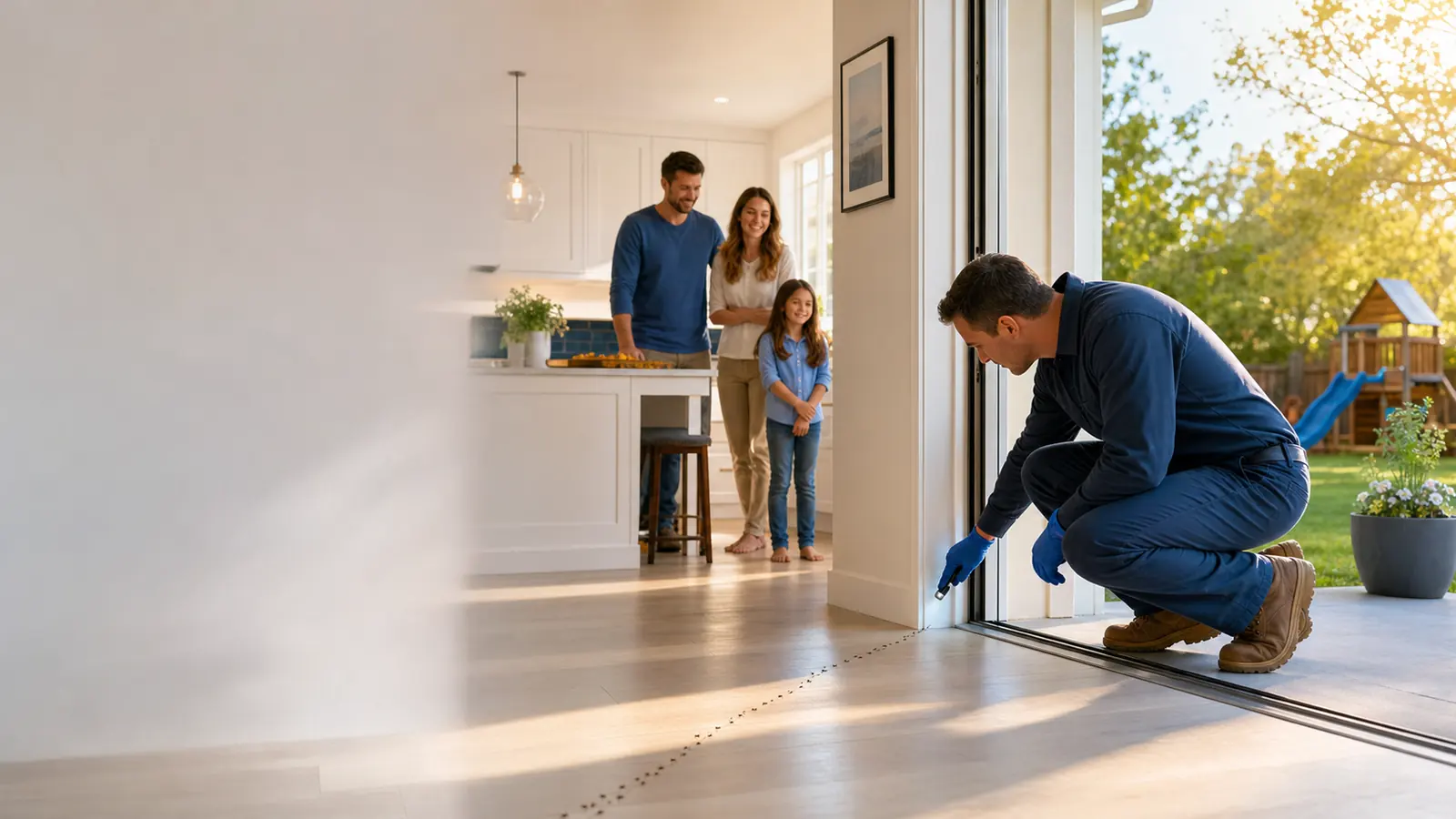
Ant trails follow conditions, we fix the conditions, then we treat the trail
The single biggest mistake on an ant call is spraying the visible bug. That scatters the colony and forces a budding split-off that's harder to control next month. Paladin technicians bait the trail first, then chase moisture and food sources that drew the scouts in.
Sugar ants in a kitchen, fire ants in a yard, and carpenter ants in damp framing all need different treatment. Our visit identifies which one you have and adjusts.
Why this post exists on the Paladin blog
This post was written by someone who actually does this work on Upstate homes, not by a contractor or a marketing team that has never seen the species in person. The Paladin blog exists to answer the questions we hear on real service calls, honestly, in plain English, without selling you a service you do not need. If a post helps you solve the problem on your own, that is a successful post for us. If you read it and decide you would rather have a trained technician on site, that is what the phone is for. Either path is fine.
A first Paladin visit is intended to document the activity, inspect relevant areas, and explain the proposed scope before work begins. Appointment timing and the exact inspection areas depend on the request and property access. Call (864) 816-7658 or use the contact form so the office can confirm the current options.
Paladin is based in Boiling Springs, SC and serves the approved Upstate locations listed on this site. Each recommendation should be tied to conditions documented at the property, including pest evidence, moisture, entry points, food, water, shelter, and access. The office confirms address availability without promising a route frequency or response window.
Keep exploring Paladin
Related Paladin services and guides for Upstate homeowners.
- See the full ant program at Paladin
- Fire ant mound control for Upstate yards
- Carpenter ant inspection for damp framing
- Sugar ant kitchen trail control
- Protect your family from ants
- Ant identification and prevention guides
- Find a city near you on our Upstate route
- Tell Paladin what you are seeing and ask about current availability
Frequently asked questions
How do I ask Paladin about carpenter ants vs. termites in upstate sc?
Call (864) 816-7658, email info@paladinpestsolutions.com, or use the contact form. Describe what you observed and the office will confirm the next available appointment.
Ready to shield your family?
One call to Paladin and we’ll meet you where you are, from a quick walk-through to a long-term protection plan.